
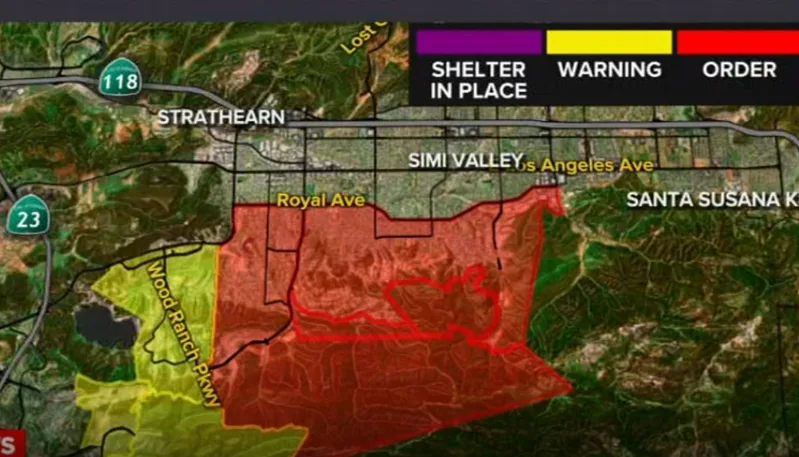
A fast-moving brush fire, known as the Sandy Fire, has burned through more than 500 acres in Simi Valley, California, forcing evacuation orders and putting fire crews under significant pressure as they battle challenging terrain and shifting conditions.
The fire erupted on Monday along the 600 block of Sandy Avenue and spread rapidly across dry vegetation, driven by warm temperatures and intermittent winds. Fire officials say the combination of dry brush, steep terrain, and limited access routes has made containment efforts difficult.
What caused the Sandy Fire?
Preliminary information suggests the fire may have started when a tractor struck a rock, creating sparks that ignited nearby dry vegetation. However, fire investigators have not officially confirmed the cause, and the investigation is still ongoing.
Evacuation zones and emergency response
Authorities have issued evacuation orders and warnings across multiple zones in Simi Valley as a precautionary measure. Residents in several designated areas were urged to leave immediately, while others were placed under evacuation warning status.
Temporary evacuation centers have been set up to assist displaced residents, while animal shelters have also been activated to support livestock and pets affected by the fire.
Local schools in the affected region confirmed that students are safe, with several campuses sheltering in place as a precaution.
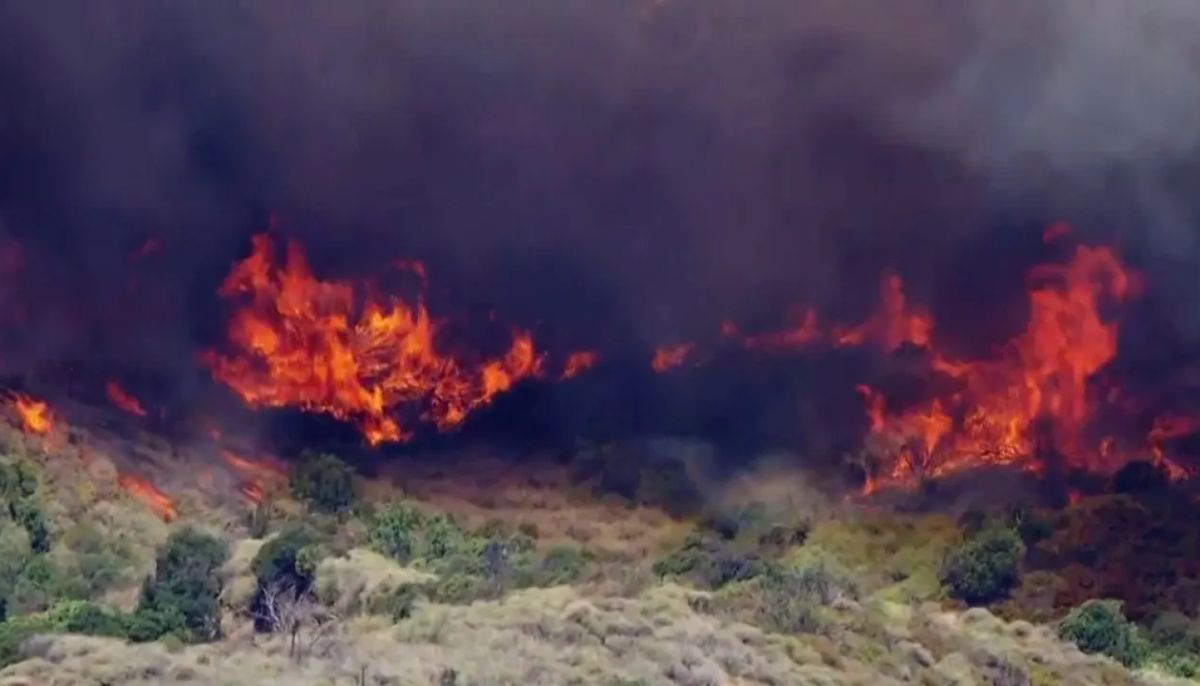
Why is the fire difficult to contain?
Firefighters are facing several challenges that are slowing containment efforts:
- Dry vegetation: The region’s brush is highly flammable after extended dry conditions.
- Terrain: Hills and uneven landscapes limit ground access for fire crews.
- Wind shifts: Even moderate wind changes can push flames into new areas.
- Rapid spread: Once ignited, brush fires can accelerate quickly across open land.
Fire officials have deployed multiple resources, including helicopters and air tankers, to slow the spread and protect nearby structures. Aerial water drops have been critical in areas where ground crews cannot safely reach.
Firefighting efforts underway
According to fire department officials, at least five helicopters and three air tankers have been used in containment operations. Ground teams continue to create fire lines in an effort to prevent further spread.
Despite ongoing efforts, officials caution that full containment may take time depending on weather conditions and fuel availability in the area.
Current situation
As of the latest updates, the Sandy Fire remains active, with containment still in progress. Authorities continue to monitor wind conditions and issue updates as the situation evolves.
Residents in surrounding areas are advised to stay alert, follow evacuation instructions, and avoid returning to affected zones until officials declare them safe.