
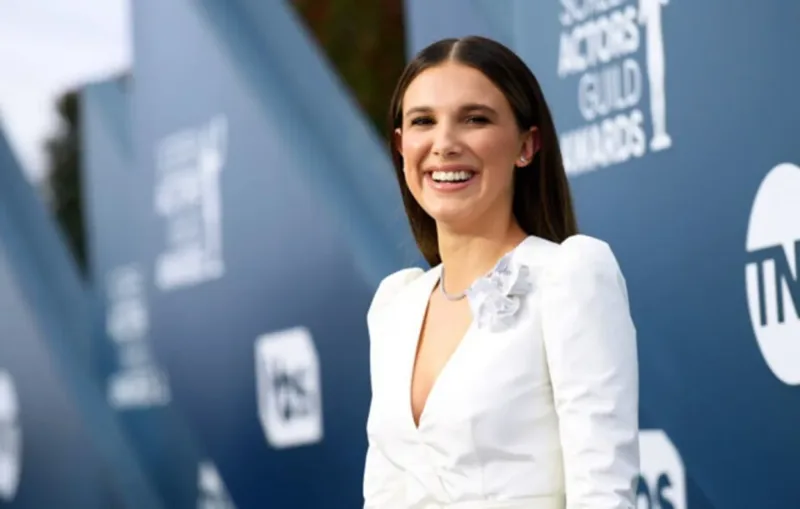
The Stranger Things actress, who is only twenty-one, considers the intense scrutiny she endured as a teenager and the quiet fortitude she developed to endure it.
At the age of eleven, Millie Bobby Brown rose to international fame. She was thrust into a level of prominence as Eleven in Stranger Things that most performers spend decades pursuing. However, as she is now learning, fame has a cost, especially for a young lady navigating puberty under the harsh scrutiny of the public. In a recent candid perspective, Brown talked on the harsh reality of growing up in the spotlight and how the criticism she received as a youngster caused scars that are only now starting to heal.
The twenty-one-year-old actress spoke with an earned candor. She talked about the strange and frequently harsh difference between her childhood identity and how the outside world saw her. Brown was being examined for her relationships, attractiveness, and even perceived maturity at a time when most girls are preoccupied with peers and schoolwork. She thought, "It's strange to grow up and realize that people were sexualizing you when you were still a child," and the comment carried a lot of weight. It is an epiphany that compels a terrible reckoning, not only for her but also for the society that devours young celebrities and rejects them when they don't fit the template.
Brown's path serves as a mirror for the entertainment business and, consequently, for society at large. We adore finding emerging talent. We take great pleasure in their charm, precociousness, and seemingly effortless intellect. However, we also enjoy destroying them. We examine their bodies, evaluate their decisions, and set demands that no adult could possibly fulfill. Brown was constantly criticized for being either too young or too old for her age, for dressing too provocatively or too modestly, and for being either too talkative or too quiet. The game was never about her; rather, it was about projecting a culture that expects perfection from everybody it elevates, so there was no way to win.
Brown's refusal to play the victim is what gives her perspective such impact. Although she admits the suffering, she won't let it define her. Rather, she talks about the armor she had to construct—a defense system that helped her endure the cacophony while maintaining the essence of her identity. "I had to learn to separate the person people see from the person I know myself to be," she stated. She acknowledges that the isolation was a survival strategy. However, it was also a significant gesture of self-preservation, a statement that her value was independent of public opinion.
Her narrative has resonance outside of Hollywood. Brown's story serves as a warning in the era of social media, where every young person is a brand and every mistake is recorded. Adolescence's unrelenting visibility—the permanence of digital footprints, the harshness of anonymous criticism, and the drive to project authenticity—has come to define a generation. In essence, Brown's battle is common, but it is magnified by the extent of her popularity.
The reminder that celebrities are not characters is perhaps the most profound lesson to be learned from her disclosure. They are human beings who mature, make mistakes, develop, and undergo change. The Eleven that spectators fell in love with was a fictional figure who Brown expertly brought to life. However, Millie Bobby Brown is not a fictional figure. She gives those who are still in the thick of things a gift by being honest: you are not who people think you are. What you decide to become is who you are.