
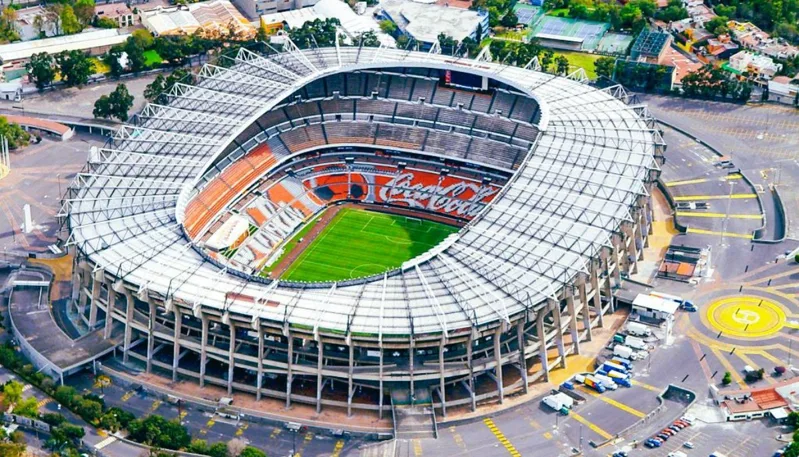
Mexico City’s iconic Estadio Azteca, set to host the opening match of the 2026 FIFA World Cup, is reportedly sinking at a concerning rate of up to 10 inches per year, according to observations highlighted by NASA.
The findings have raised fresh questions about infrastructure stability ahead of football’s biggest global tournament, which will be jointly hosted by the United States, Mexico, and Canada. The competition is scheduled to begin on June 11, 2026, with Estadio Azteca expected to stage the opening fixture.
Why is Mexico City sinking?
Scientists attribute the phenomenon to long-term groundwater extraction from the city’s underlying aquifer system. As water is pumped out to meet the needs of one of the world’s largest urban populations, the soil beneath gradually compacts.
According to NASA researchers, the process is not new but is accelerating in some areas of the capital.
A scientist at NASA’s Jet Propulsion Laboratory, Marin Govorcin, explained that the weight of the city combined with groundwater depletion is driving the subsidence.
“The water drawn from the aquifer compacts under the weight of the city above it,” Govorcin noted.
Reports suggest that parts of Mexico City may be sinking by nearly half an inch every month, making it one of the most rapidly subsiding major cities in the world.
What does this mean for the World Cup stadium?
Estadio Azteca is one of football’s most historic venues, known globally for moments such as the famous Hand of God scored by Diego Maradona.
The stadium has a seating capacity of around 87,500 and is scheduled to host multiple matches during the 2026 tournament, including the opening game.
While structural engineers have previously worked on renovations and reinforcements, the latest reports have revived concerns about long-term ground stability in the region.
Should fans be worried?
At present, there is no indication from FIFA or Mexican authorities that the venue is unsafe or at risk of being removed from World Cup hosting duties. However, the subsidence issue has prompted renewed attention from scientists and infrastructure experts.
Experts emphasize that the sinking is a gradual geological process rather than an immediate structural failure. Still, it highlights the engineering challenges of maintaining large stadiums in areas affected by long-term ground movement.
What happens next?
Authorities are expected to continue monitoring ground movement around Mexico City’s major infrastructure sites, including stadiums and transport systems, as preparations for the 2026 World Cup continue.
For now, Estadio Azteca remains on schedule to host one of the most anticipated sporting events in the world — even as the ground beneath it slowly shifts.