
The Prophet's Diet Was Never Outdated. We Just Stopped Following It
We Are the Most Informed Generation and One of the Sickest
We track macros. We count calories. We spend thousands on supplements promising to fix what processed food broke. Oat milk lattes, collagen powders, and probiotic gummies line our kitchen counters while heart disease, diabetes, and chronic fatigue quietly become the norm. We are the most nutritionally "informed" generation in history. And somehow, one of the sickest. The answer was never missing.
It was preserved in authentic Hadith fourteen centuries ago, waiting for a generation desperate enough to look back. What if the original diet was right all along?
Seven Dates. Every Morning. Before Anything Else
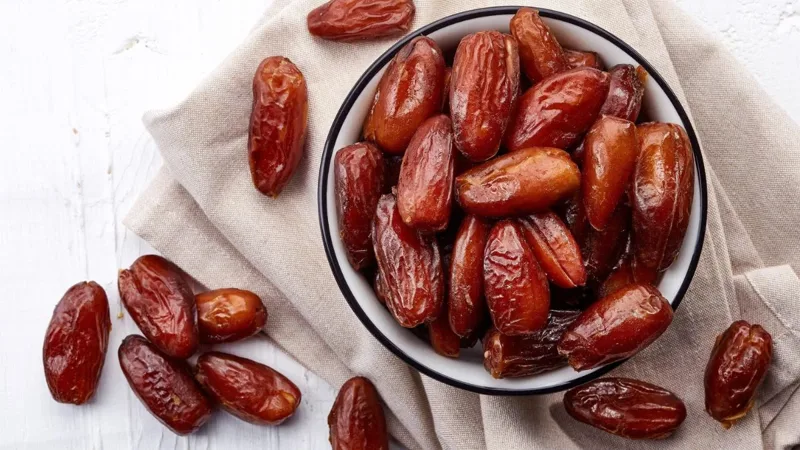
Prophet Muhammad ﷺ began every morning with seven Ajwa dates "He who eats seven 'Ajwa dates every morning will not be affected by poison or magic on that day" (Sahih al-Bukhari, No. 5445 | Sahih Muslim, No. 2047) and broke his fast with dates before anything else (Sunan Abi Dawud, No. 2349 | Narrated by Anas ibn Malik).
This was not ritual alone. Research published in ScienceDirect (Al-Yahya et al., 2016, Phytomedicine) confirmed Ajwa extract carries strong antioxidant, cardioprotective, and anti-inflammatory potential — protecting heart tissue at the cellular level. A further study on PubMed (PMC6341075) identified its polyphenols and flavonoids directly inhibiting cancer cell proliferation. Seven dates. Every morning. Before your phone. Before your coffee. Before anything else.
Honey — The Cure Your Kitchen Forgot
The Prophet ﷺ prescribed honey as medicine — a man's abdominal illness was cured on that instruction alone — (Sahih al-Bukhari, No. 5684 | Sahih Muslim, No. 2217). The Quran declared it a healing for mankind — "There comes forth from their bellies a drink wherein is healing for mankind" (Surah An-Nahl, 16:69).
Today we replaced it with high-fructose corn syrup. A study in Antibiotics journal (Nolan, Harrison & Cox, MDPI, 2019) confirmed raw honey fights infection through three independent compounds — hydrogen peroxide, methylglyoxal, and bee defensin-1. Documented in BMC Research Notes (Springer, 2015) — no bacteria have ever developed resistance to honey. No modern antibiotic can say the same. One spoon every morning. That is all it takes.
Olive Oil — The Blessing You Are Still Not Cooking With
The Prophet ﷺ instructed "Eat olive oil and anoint yourselves with it, for it comes from a blessed tree" (Sunan Ibn Majah, No. 3319 | Sunan Tirmidhi, No. 1851 | Musnad Ahmad, Vol. 3). The Quran named the olive tree blessed (Surah An-Nur, 24:35).
A 2025 study in MDPI's International Journal of Molecular Sciences confirmed olive oil's polyphenols reduce cardiovascular inflammation, modulate cholesterol, and protect vascular endothelium at the cellular level.
Replace every refined oil in your kitchen with extra virgin olive oil. The Prophet ﷺ ate it, applied it, and recommended it , modern cardiology spent decades catching up to understand why.
Black Seed — One Hadith That Stunned a Thousand Researchers
"This black cumin is healing for all diseases except death" (Sahih al-Bukhari, No. 5688 | Sahih Muslim, No. 2215)</u>. One claim. Fourteen centuries old. A 2022 study in Frontiers in Cellular Neuroscience confirmed its active compound thymoquinone as antioxidant, anti-inflammatory, antibacterial, and anti-neurodegenerative.
A 2024 review in MDPI's International Journal of Molecular Sciences classified it as protective against cancer, diabetes, cardiovascular disease, and neurological disorders simultaneously.
A 2020 meta-analysis in ScienceDirect confirmed it significantly improves antioxidant capacity in human participants. One seed. One Hadith. Hundreds of peer-reviewed studies in agreement. Mix a teaspoon of black seed oil with raw honey every morning. That combination alone outperforms most supplement stacks people spend thousands assembling.
One Rule. Every Meal. For the Rest of Your Life.
"The son of Adam fills no vessel worse than his stomach. Let him fill one-third with food, one-third with drink, and one-third with air"</u> <u>(Sunan at-Tirmidhi, No. 2380 | Sunan Ibn Majah, No. 3349).
Modern medicine calls this caloric restriction and charges consultation fees to say it. Stop eating at two-thirds full. Every meal. Every time. Seven Ajwa dates at dawn. Honey with black seed oil on an empty stomach. Extra virgin olive oil on every meal. A stomach never filled beyond two-thirds. That is not a wellness programme. That is a Sunnah — and science, with every passing decade, keeps proving it was right all along.
References
Hadith Sources
Sahih al-Bukhari, No. 5445 | Sahih Muslim, No. 2047(Ajwa dates)
Sunan Abi Dawud, No. 2349 (Breaking fast with dates)
Sahih al-Bukhari, No. 5684 | Sahih Muslim, No. 2217 (Honey as medicine)
Surah An-Nahl, 16:69 (Honey — Quranic reference)
Sunan Ibn Majah, No. 3319 | Sunan Tirmidhi, No. 1851 | Musnad Ahmad, Vol. 3 (Olive oil)
SSurah An-Nur, 24:35 (Olive tree — Quranic reference)
Sahih al-Bukhari, No. 5688 | Sahih Muslim, No. 2215 (Black seed)
Sunan at-Tirmidhi, No. 2380 | Sunan Ibn Majah, No. 3349 (One-third rule)
Scientific Sources
— Al-Yahya et al. (2016), Phytomedicine, ScienceDirect (Ajwa — cardioprotective)
— PMC6341075, PubMed (Ajwa — anticancer)
— Nolan, Harrison & Cox (2019), Antibiotics, MDPI (Honey — antimicrobial compounds)
— BMC Research Notes, Springer (2015) (Honey — no bacterial resistance)
— PMC / NCBI (2021) (Honey — MRSA activity)
— Frontiers in Cellular Neuroscience (2022) (Thymoquinone — properties)
— MDPI, International Journal of Molecular Sciences (2024) (Thymoquinone — disease review)
— ScienceDirect (2020) (Nigella sativa — RCT meta-analysis)
— MDPI, International Journal of Molecular Sciences (2025) (Olive oil — cardiovascular)