
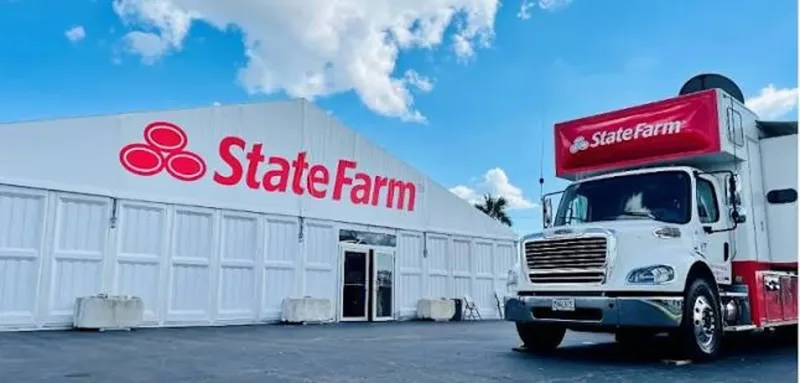
State Farm Mutual is distributing $5 billion in dividend payments to auto insurance customers — the largest such payout in the company's history — covering more than 49 million vehicles nationwide. Individual payments range from 4% to 10% of what each customer paid in 2025 premiums, with the exact rate determined by the state where the policy is held.
Why State Farm Can Do This When Other Insurers Can't
The mechanism behind this payout is the real story, and it's one most drivers with other major insurers will never see reflected in their own bills. State Farm Mutual is a mutual insurance company, meaning it's owned by its policyholders rather than outside shareholders — a structural difference from publicly traded rivals like Progressive or Allstate, which answer to stock investors expecting returns paid out as dividends to shareholders, not customers. When a mutual insurer's claims costs come in meaningfully below what its premiums assumed, the resulting surplus has nowhere else to go but back to the people who paid in.
"As a mutual company with a customer-first focus, State Farm Mutual is able to provide value directly to our customers while maintaining financial strength to keep our promises in the future," State Farm Mutual President and CEO Jon Farney said in a statement, adding that this year's result "translated to lower auto rates and cash back in the form of a $5 billion policyholder dividend."
The Industry Backdrop Making This Possible
This payout isn't happening in isolation — it's landing during the strongest underwriting environment the US auto insurance industry has seen in a generation. Personal auto insurers posted a net combined ratio of 95.3 in 2026, the best post-pandemic result on record, while the broader property and casualty industry recorded its best first-quarter underwriting result in at least 25 years, according to S&P Global Market Intelligence. State Farm specifically posted an underwriting gain of nearly $2 billion in the first quarter of 2026 alone — a swing of more than $7 billion from the losses insurers were absorbing just a few years earlier, when repair costs, claims severity, and post-pandemic driving patterns were pushing the entire industry into the red.
That turnaround explains the dividend's timing precisely: premiums that were raised sharply in 2023 and 2024 — 14.4% and 12.8% respectively, among the steepest increases in modern industry history — have now caught up with and outpaced claims costs, leaving insurers like State Farm with more premium revenue coming in than payouts going out. For a mutual company, that surplus becomes a dividend. For a shareholder-owned insurer, the same surplus more typically becomes profit retained on the balance sheet or returned to investors instead.
What This Means If You're Not a State Farm Customer
Here's the detail worth understanding even for readers with no State Farm policy at all: this dividend is a signal about where the broader US auto insurance market currently sits, not a State Farm-specific anomaly. Rate increases are still happening nationally in 2026, but industry analysts describe them as decelerating compared to the sharper hikes of 2023-24, precisely because underwriting profitability across most major carriers — Progressive, Allstate, GEICO, USAA, Farmers, and Liberty Mutual all posted underwriting gains exceeding $1 billion in the same quarter — has largely caught up with the loss costs that drove those earlier increases. Whether that translates into rate relief for any individual driver depends heavily on their specific insurer, state, and claims history, but the underlying trend favors slower premium growth going forward rather than the rapid increases of the past few years.
How the Payout Works
State Farm is notifying eligible customers by email or mailed letter, and policyholders can check what they're owed by signing into the State Farm app or website — no action is required to claim the payment, which will arrive as either a paper check or an electronic deposit. Customers insuring multiple vehicles through State Farm may receive a separate payment for each one. Given the scale of the rollout across more than 49 million vehicles, the company says completing payments to all eligible customers will take several months. Accepting the dividend has no bearing on future premiums, and customers with questions can call 1-888-808-9532 or visit sfdividend.com.
State Farm, ranked No. 32 on the 2025 Fortune 500 list, serves more than 96 million policies and accounts across auto, home, life, and other coverage lines — making this dividend one of the largest single cash-back distributions in US insurance history, mutual or otherwise.