
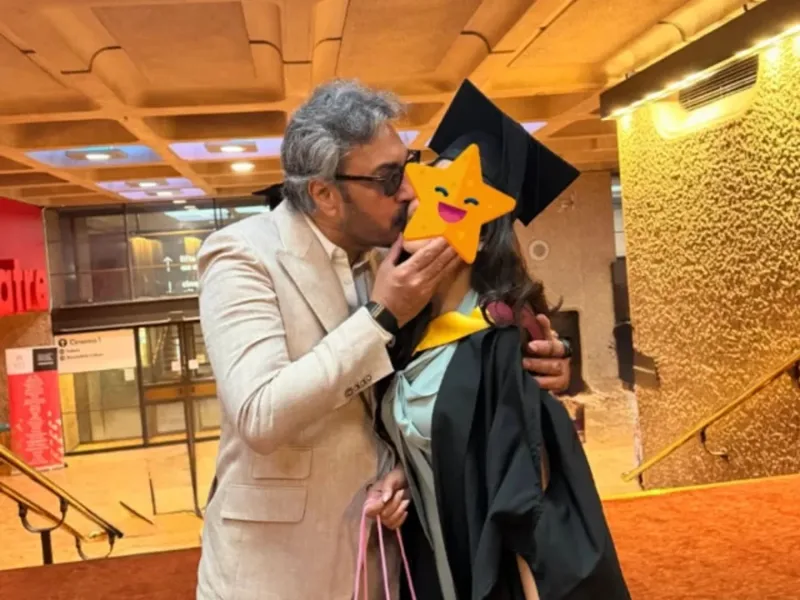
For parents everywhere, veteran actor Adnan Siddiqui has a simple message: your child's character is more important than their grades. The celebrity made a sincere plea for families to put less emphasis on academic success and more on instilling in their kids strong values, such as patience, kindness, honesty, and emotional fortitude.
Siddiqui, a father himself and a public figure for decades, talked from personal experience. He noted that a lot of parents nowadays are caught up in a competition for admission, grades, and renowned degrees. He cautioned that education should never come at the expense of a child's moral and emotional growth, even though it is unquestionably vital. "A degree can get you a job," he stated, "but only character can sustain you through life's ups and downs."
The actor's remarks coincide with a period of unprecedented academic pressure on youth. From a young age, children are encouraged to do well on tests, land high-level jobs, and create beautiful resumes. However, Siddiqui contends that this method frequently leaves students emotionally brittle and ill-prepared for the real world. He thought back to his own childhood, when his parents placed a strong emphasis on education as well as virtues like respect, empathy, and thankfulness. He claimed that those teachings have helped him more than any degree could.
In today's fast-paced, achievement-driven culture, Siddiqui's message is especially pertinent. Social media increases the pressure since parents frequently compare their kids' accomplishments there, fostering a culture of perpetual rivalry. However, the actor warned parents that each child is different and that test results alone cannot determine their value. "A child with a strong heart and clear conscience will always find their way," he stated.
The celebrity also discussed how important it is to set an example for others. He advised parents to set an example for their kids by being nice, patient, and honest in their own day-to-day interactions. He pointed out that children learn much more from what they see than from what they are taught. If a child witnesses their parent taking short cuts or distorting the facts, empty lectures about honesty won't mean anything.
Siddiqui's argument is a call for balance rather than a rejection of education. Strong character and academic achievement, in his opinion, are not mutually exclusive. In fact, he proposed that children with strong moral foundations tend to do better over time because they have the empathy to make deep connections and the resilience to deal with adversity. They are more capable of overcoming obstacles at work, upholding wholesome relationships, and making constructive contributions to society.
Siddiqui's argument is a call for balance rather than a rejection of education. Strong character and academic achievement, in his opinion, are not mutually exclusive. In fact, he proposed that children with strong moral foundations tend to do better over time because they have the empathy to make deep connections and the resilience to deal with adversity. They are more capable of overcoming obstacles at work, upholding wholesome relationships, and making constructive contributions to society.
Raising children who are not only intelligent but also good is Adnan Siddiqui's straightforward yet significant advice. His appeal for character-driven parenting serves as a potent reminder that the greatest gift a parent can offer their child is not a distinguished degree but rather a strong, caring, and moral heart in a society that frequently values ambition above compassion. That, in his opinion, is the cornerstone of a genuinely successful existence.