
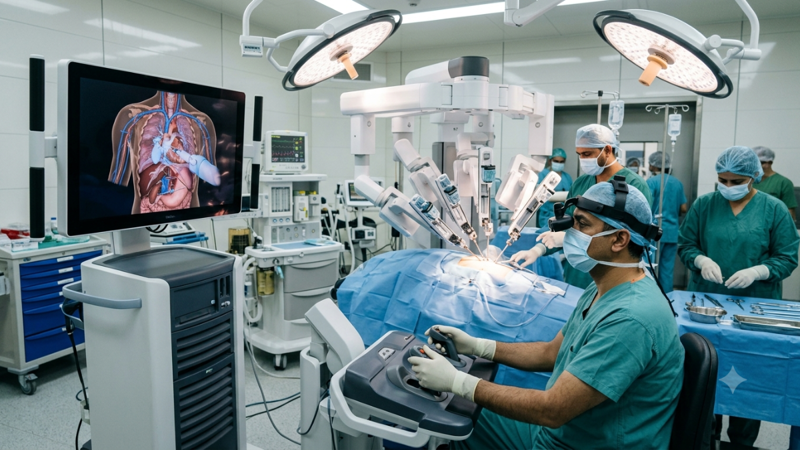
Modern technology advances have made artificial intelligence (AI) an integral part of the health care system, and it has already become possible to say that AI has positively impacted such processes like complicated surgeries, increasing their precision and accuracy. Modern AI-aided surgical robots help doctors prepare for the operation, guide complicated procedures, and minimize the chances of complications.
In contrast with traditional surgical robots that follow orders from a surgeon, modern AI-aided robots are capable of analyzing medical images, detecting specific anatomical structures, and giving recommendations throughout the whole operation. Nonetheless, medical specialists stress that this kind of surgical robot does not substitute for a surgeon; it works as a sophisticated assistant to help a doctor to make the right decision while being in full control over all of the procedures.
Before starting an operation, an AI system analyzes thousands of medical images, such as CT scans and MRI scans, creating a three-dimensional image of a patient's anatomy. Such a three-dimensional image helps a surgeon to plan the procedure carefully and choose the most effective approach to carrying out the surgery.
The robotic surgery can use the machine to display the blood vessels, nerves, and other tissues on a computer screen. The computer will also detect the movements made by the surgical instruments and warn the medical team if any of those movements pose potential threats of damaging any other body part. The technology could prove beneficial when conducting surgeries in which there is a need for high precision such as brain, heart, and spine surgery among others.
According to the researchers, AI-assisted robotics will help to reduce the effects of tremor hands and make the surgical instruments execute movements with extreme precision. The technique will provide great value when conducting minimally invasive surgery as the doctor will conduct the operation by making small openings.
Numerous hospitals across the world have incorporated robot-assisted surgery techniques in procedures including prostate surgery, kidney surgery, gynecological surgery, colorectal surgery, and certain cardiac surgeries. Some studies suggest that, in some situations, the robotic assisted surgery technique is likely to result in smaller incisions, reduction of blood loss, postoperative pain, low infections, and quicker recovery process than traditional surgery techniques.
Moreover, scientists explore the way AI can predict potential complications that might occur during the operation and thus assist surgeons. With the help of AI, the analysis of the patient data and comparison with thousands of surgical cases that have occurred in the past can reveal specific risks that need to be taken into account.
However, it is necessary to note that despite all mentioned achievements, AI is a supportive tool that plays an additional role in the process of the surgery. All crucial decisions are made by licensed surgeons, who use their knowledge and experience for ensuring the safe procedure of the operation. In addition, specialists mention that the usage of the AI needs thorough testing and regulatory approvals.
It is believed that scientists will be able to develop such an effective system of AI-assisted robotic surgery, which would be highly precise, provide good support to surgeons, and be useful for training new surgeons with the help of simulation and real-time assistance.
Nevertheless, even now, specialists believe that AI-powered robotic surgery is a significant step ahead in the field of modern medicine.