
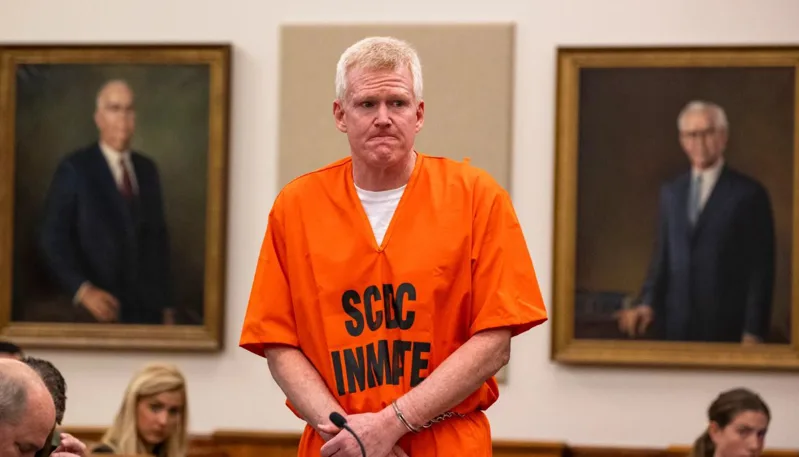
The South Carolina Supreme Court has unanimously overturned the murder convictions of disgraced former attorney Alex Murdaugh, ordering a new trial in the high-profile killings of his wife and son, in a major legal reversal that reignites one of the most closely watched criminal cases in recent U.S. history.
Court cites jury interference and trial misconduct
In a 5–0 decision issued on Wednesday, the state’s highest court ruled that Murdaugh did not receive a fair trial due to improper influence on the jury by former Colleton County Clerk of Court Rebecca “Becky” Hill.
The justices concluded that Hill’s actions compromised the integrity of the proceedings, citing “improper external influence” and “shocking jury interference” that undermined the defendant’s constitutional right to an impartial jury.
The court emphasized that despite the significant time, resources, and public attention devoted to the original trial, the misconduct was serious enough to require reversal of the conviction and a retrial.
What the ruling means
The decision vacates Murdaugh’s 2023 convictions for the murders of his wife Maggie and 22-year-old son Paul, sending the case back to circuit court for a new trial.
However, Murdaugh is not expected to be released, as he remains incarcerated on separate financial crime convictions, including fraud and embezzlement schemes involving millions of dollars stolen from clients.
Who influenced the trial?
Central to the court’s ruling was Becky Hill, the former court clerk who oversaw administrative aspects of the 2023 trial.
Hill was accused of improperly interacting with jurors, making comments about the defendant’s credibility, and allegedly attempting to shape perceptions during deliberations. She later became the subject of criminal charges and pleaded guilty to misconduct-related offenses, including perjury and obstruction of justice in unrelated proceedings.
The court found that her conduct created an unacceptable risk that the jury’s verdict was influenced by outside interference rather than evidence presented in court.
Background of the murder case
Murdaugh, once a powerful South Carolina attorney from a long-established legal dynasty, was convicted in March 2023 of murdering his wife and son at the family’s rural estate in June 2021.
Prosecutors argued that he carried out the killings to divert attention from a collapsing financial fraud scheme involving stolen client funds. The case drew national attention, fueled by dramatic courtroom testimony, documentary coverage, and widespread media interest.
He was sentenced to two consecutive life terms without parole.
A case that captivated America
The Murdaugh trial became one of the most widely followed criminal proceedings in recent U.S. history, spawning podcasts, documentaries, books, and global media coverage.
The latest ruling is expected to renew public scrutiny of the case and could lead to another lengthy and closely watched trial process.
What happens next?
With the convictions overturned, prosecutors now face the decision of whether to retry Murdaugh on the murder charges.
Legal experts say the retrial could revisit much of the original evidence, including forensic findings, financial crime links, and testimony that painted a picture of a once-powerful lawyer’s dramatic downfall.