
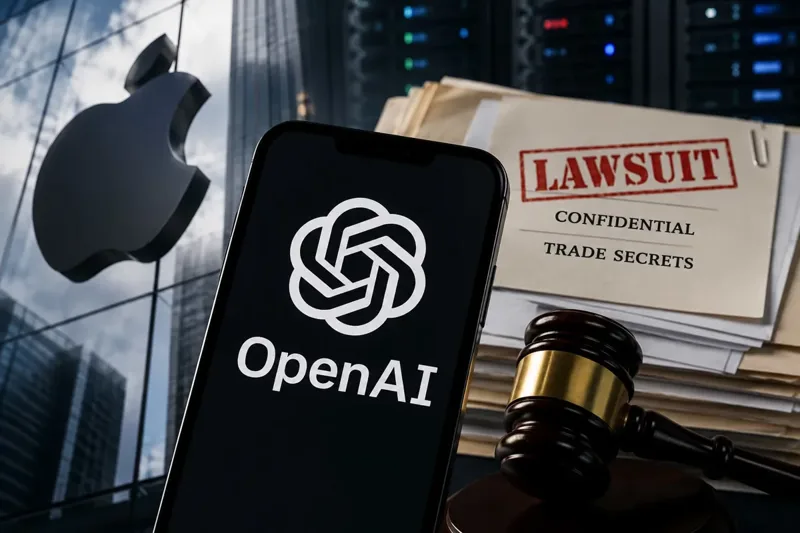
Apple has files a lawsuit against OpenA, claiming the artificial intelligence company benefited from theft of confidential company information by former Apple employees. OpenAI has denied the allegations, saying it has no interest i using competitors' trade secrets and will defend itself in court.
The lawsuit is based on Apple's claim that several former employees who later joined OpenAI took sensitive information related to unreleased hardware projects, product designs, engineering documents, and supplier information. Apple argues that this confidential material helped OpenAI speed up its own hardware ambitions.
According to the court filing, Apple specifically names former employees Tang Tan and Chang Liu, who previously worked at Apple before moving to OpenAI. Apple alleges that confidential company files were accessed or retained after the employees left the company. One allegation claims a former engineer accessed Apple's internal network through a software vulnerability after joining OpenAI.
Apple also claims that OpenAI's recruitment process encouraged employees to share confidential information during interviews. The lawsuit alleges that candidates were asked about Apple's unreleased products and internal technologies, and in some cases were encouraged to bring technical details with them. OpenAI strongly disputes these accusations.
OpenAI has responded by saying that it does not seek or use confidential information belonging to competitors. The company says the lawsuit's claims are not supported by evidence and that it remains focused on developing new AI technologies independently.
The legal dispute is especially notable because Apple and OpenAI were business partners only a short time ago. In 2024, Apple integrated ChatGPT into several of its products as part of AI strategy. However, the relationship changed as OpenAI expanded into consumer hardware, creating a potential future competitor to Apple's own devices.
Industry experts say trade secret lawsuits are different from patent disputes. Instead of arguing over wo owns an invention, trade secret cases focus on whether confidential business information was improperly obtained or used. Apple will need to prove that its information was truly secret, that it took reasonable steps to protect it, and that the information was improperly used.
The case could become one of the biggest legal battles in technology industry this year because it involves two companies leading different parts of AI revolution. During legal process, both sides may be required to share documents, emails, and other evidence through court-supervised discovery. That process could reveal more details about how companies recruit employees and develop new hardware products.
At this stage, these are allegations made in Apple's lawsuit, not proven facts. The court has not ruled whether OpenAI or the former employees violated any laws. The case is expected to more through the U.S. legal system over the coming months, with both companies likely to present extensive evidence supporting their positions.
The outcome could influence how technology companies protect trade secrets, recruit employees from competitors, and develop new AI-powered hardware in the future. Many legal experts believe the case may also shape future rules surrounding intellectual property and competition in the rapidly growing AI industry.