
In July 1969, an American astronaut made history by setting foot on the moon, captivating viewers around the globe. For a fleeting moment, what once seemed impossible became a reality. However, the missions ceased, funding was slashed, and for over fifty years, the moon remained quiet — only explored by robotic missions. But in 2026, the moon has regained its prominence on the world stage. This time, it's not only the United States making a return; China is closely following behind and the competition is more intense than many realize.
Just a few days ago, on July 5, NASA Administrator Jared Isaacman made a bold statement during an American television interview. "We are currently very much engaged in a space race," he remarked, emphasizing that China is "advancing.
NASA's strategy revolves around the Artemis program — a collection of missions aimed at returning humans to the moon's surface for the first time since the Apollo era. In April 2026, Artemis II saw four astronauts aboard NASA's Space Launch System rocket and Orion spacecraft embark on a ten-day lunar flyby before making their way back to Earth, signifying the first crewed test of the Artemis initiative. This occasion was a moment of national pride for the United States — and a clear message to Beijing that America is committed.
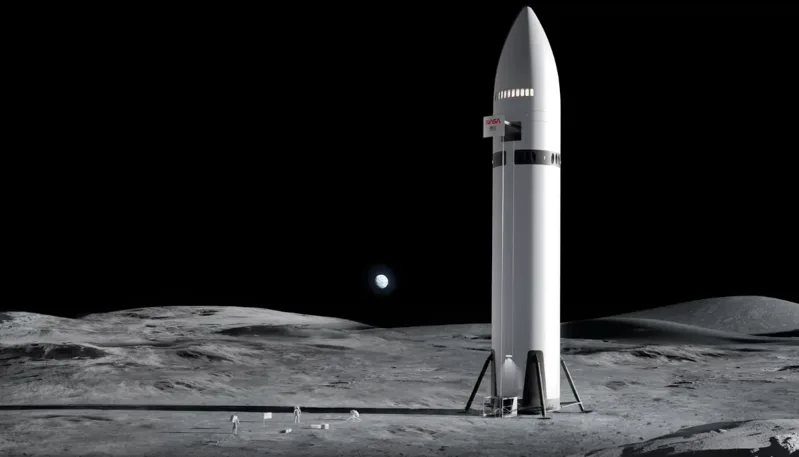
However, NASA's journey to the moon has faced significant challenges. The agency has notably changed its objectives for the forthcoming Artemis III. China is already envisioning plans that extend beyond a single lunar landing. The country is establishing the foundations for a permanent presence on the moon through the International Lunar Research Station, a two-phase lunar base being developed in collaboration with Russia's space agency, Roscosmos. The initial phase aims to build a basic station in the lunar south pole region by 2035, while the enhanced facility is set to be finalized by 2045. In the meantime, NASA is working diligently to keep pace with this ambition. The agency has engaged both SpaceX and Blue Origin, founded by Jeff Bezos, to create competing lunar landers and has revealed intentions to conduct missions nearly every month starting in 2027. NASA has stated that it will launch with whichever provider is ready first.
China is already envisioning plans that extend beyond a single lunar landing. The country is establishing the foundations for a permanent presence on the moon through the International Lunar Research Station, a two-phase lunar base being developed in collaboration with Russia's space agency, Roscosmos. The initial phase aims to build a basic station in the lunar south pole region by 2035, while the enhanced facility is set to be finalized by 2045. In the meantime, NASA is working diligently to keep pace with this ambition. The agency has engaged both SpaceX and Blue Origin, founded by Jeff Bezos, to create competing lunar landers and has revealed intentions to conduct missions nearly every month starting in 2027. NASA has stated that it will launch with whichever provider is ready first.