
China on Wednesday sharply criticised the United States over its indictment of former Cuban leader Raul Castro, warning Washington against what Beijing described as continued threats and pressure on Havana amid rising geopolitical tensions in the region.
The latest diplomatic confrontation erupted after the U.S. Department of Justice announced charges against Castro over his alleged involvement in the 1996 downing of two humanitarian aircraft operated by the Miami-based group Brothers to the Rescue. The incident resulted in the deaths of four people, including three American citizens, and remains one of the most controversial episodes in modern U.S.-Cuba relations.
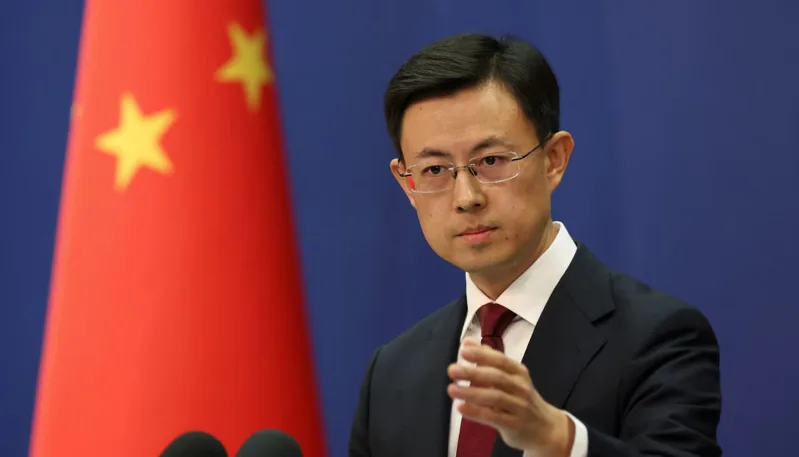
Responding to the indictment, Chinese Foreign Ministry spokesperson Guo Jiakun reaffirmed Beijing’s support for Cuba and accused the United States of pursuing an aggressive foreign policy toward the communist-run island nation.
“The United States should stop threatening force at every turn,” Guo said during a regular press briefing, adding that China firmly opposes external interference and political pressure against Havana.
He further stated that Beijing “resolutely supports Cuba in safeguarding its national sovereignty and national dignity,” while reiterating China’s longstanding opposition to sanctions and unilateral coercive measures imposed by Washington.
The remarks mark one of China’s strongest public statements in support of Cuba in recent months and come at a time when tensions between Washington, Beijing and several U.S. adversaries are intensifying across multiple regions.
Raul Castro, 94, is the younger brother of late Cuban revolutionary leader Fidel Castro and remains one of the most influential figures in the country’s modern political history. He served for decades as Cuba’s defence minister before succeeding Fidel Castro as president in 2008. Raul formally stepped down from the presidency in 2018 and later relinquished leadership of the Communist Party in 2021.
U.S. prosecutors allege that Cuban authorities were responsible for authorising the destruction of the civilian aircraft after they entered Cuban airspace during politically charged humanitarian missions organised by anti-Castro activists based in Florida.
The indictment has triggered strong condemnation from Cuban officials, who dismissed the charges as politically motivated and accused Washington of attempting to revive Cold War-era hostility toward the island.
Cuban President Miguel Diaz-Canel criticised the U.S. move, describing it as a “political manoeuvre” aimed at escalating pressure on Havana at a time when the country is facing severe economic difficulties.
Relations between the United States and Cuba have remained deeply strained for decades despite brief diplomatic openings in previous years. Washington has maintained sweeping economic sanctions and trade restrictions on the island, while successive U.S. administrations have accused Havana of suppressing political freedoms and undermining American interests in the region.
The decades-long embargo, combined with fuel shortages, inflation and declining tourism revenues, has contributed to a worsening economic and energy crisis in Cuba. Frequent nationwide blackouts and shortages of basic goods have fuelled growing public frustration across the Caribbean nation.
China, meanwhile, has steadily expanded its political and economic ties with Cuba in recent years as Beijing seeks to strengthen its influence across Latin America and counter U.S. dominance in the region. Analysts view China’s latest remarks as part of a broader effort to position itself as a strategic ally to governments facing pressure from Washington.
The diplomatic dispute also comes amid heightened speculation over future U.S. policy toward Cuba following recent comments attributed to President Donald Trump regarding potential action against hostile governments after the conflict involving Iran.
Although no official military policy toward Cuba has been announced by Washington, the comments have raised concerns in Havana and among U.S. rivals about the possibility of increased American pressure in the region.
Earlier this year, Cuban officials warned that any direct military confrontation would have devastating consequences for regional stability. Diaz-Canel previously cautioned that military escalation could trigger “a bloodbath” and destabilise broader Latin American security.
The renewed tensions are likely to further complicate already fragile relations between the United States, Cuba and China, while reinforcing the growing geopolitical divide between Washington and its global rivals.