
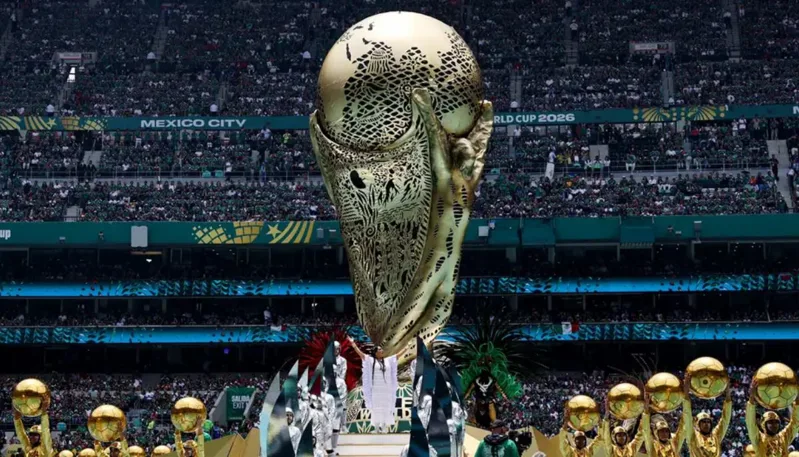
As the FIFA World Cup 2026 gets underway across the United States, Canada and Mexico, millions of new and casual fans are preparing to follow football's biggest tournament.
With the competition expanding from 32 teams to 48 teams for the first time in history, the rules and format have changed significantly. Here is a beginner's guide to everything fans need to know before watching the World Cup.
The 2026 FIFA World Cup features 48 national teams divided into 12 groups of four teams each. Every team plays three group-stage matches, facing each opponent in its group once.
Teams receive three points for a win, one point for a draw and zero points for a defeat. Unlike knockout matches, group-stage games can end in a draw after 90 minutes and stoppage time. No extra time or penalty shootout is played during the group stage.
The top two teams from each group automatically qualify for the knockout stage. In addition, the eight best third-placed teams across all 12 groups also advance, bringing the total number of qualified teams to 32.
If two or more teams finish level on points in the group stage, FIFA uses a series of tie-breakers. Goal difference is considered first, followed by goals scored. If teams remain level, head-to-head records are examined before fair-play points and, if necessary, a drawing of lots.
One of the biggest changes in the 2026 tournament is the introduction of the Round of 32. Previous World Cups moved directly from the group stage to the Round of 16, but the expanded tournament now includes an additional knockout round.
From the Round of 32 onwards, every match must produce a winner. If a knockout-stage game remains level after 90 minutes, two periods of extra time lasting 15 minutes each are played. If the score is still tied after extra time, the match is decided by a penalty shootout.
Penalty shootouts follow traditional FIFA rules. Each team takes five penalties initially, alternating with its opponent. If the score remains tied after five kicks each, the contest moves to sudden death until a winner is determined.
Fans should also understand the offside rule, one of football's most debated laws. A player is considered offside if they are nearer to the opponent's goal line than both the ball and the second-last defender when a teammate plays the ball to them. Being in an offside position alone is not an offence; the player must become involved in active play.
The Video Assistant Referee (VAR) system will once again be used throughout the tournament. Match officials can review incidents involving goals, penalties, direct red cards and cases of mistaken identity. VAR is designed to correct clear and obvious errors made during a match.
Yellow and red cards also play an important role. A player who receives two yellow cards in the same match is sent off and shown a red card. A direct red card results in immediate dismissal from the game. Suspensions can carry over into future matches depending on the offence.
Teams are allowed to name a 26-player squad for the tournament. During matches, coaches can make up to five substitutions, although those changes must generally be made within three substitution windows, excluding half-time.
The tournament consists of 104 matches and runs from June 11 to July 19, making it the largest World Cup ever staged. Any team that reaches the final will have to play eight matches to lift the trophy, one more than under the previous 32-team format.
While the rules may seem complicated at first, the objective remains simple: score more goals than the opposition. From dramatic penalty shootouts and VAR reviews to giant-killing upsets and title celebrations, the World Cup remains football's ultimate stage.