
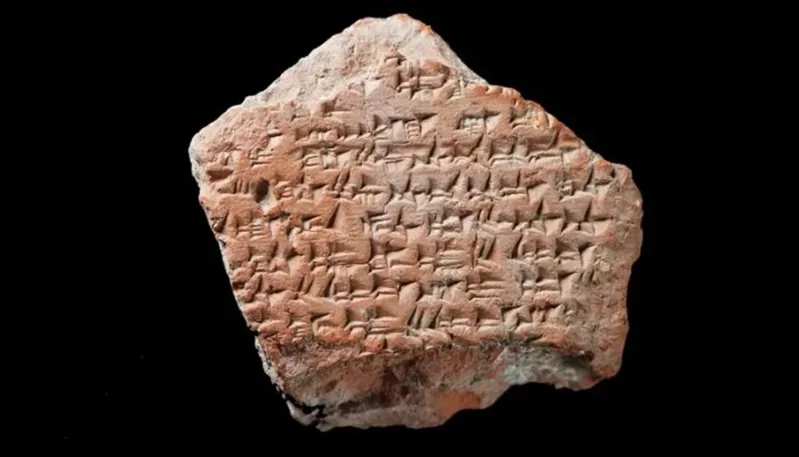
A broken clay tablet found in Turkey preserves an unexpectedly personal part of an ancient peace agreement: what should happen to people who flee across a border.
Turkey’s Culture and Tourism Ministry has identified the fragment as part of a copy of the Treaty of Kadesh between the Egyptian ruler Ramesses II and the Hittite king Hattusili III. The discovery was announced on September 21.
The piece came from near Building E at Büyükkale, the royal palace area of Hattusha. According to the ministry’s statement, researchers spent about a year examining it before establishing the connection.
What the fragment says about refugees
The surviving Akkadian cuneiform lines concern people fleeing Egypt or Hatti and include wording about protecting their homes from destruction. The ministry links them to provisions covered in articles 12–20 of the agreement.
The wider treaty required people who fled to the other country to be returned. It also prohibited punishments such as mutilation and the destruction of their homes and families, Live Science explains.
That distinction matters when reading the reference to refugees: the agreement dealt with their return as well as their treatment, rather than offering a modern right to asylum.
A new piece of an already known agreement
The treaty itself was not discovered for the first time this week. Egyptian versions survive on temple walls, while clay fragments were recovered at Hattusha during excavations in 1906–1912.
The latest identification adds to those surviving copies. Excavations continue in the hope of finding further missing pieces.
For more discoveries and research, visit our Science & Health coverage.