
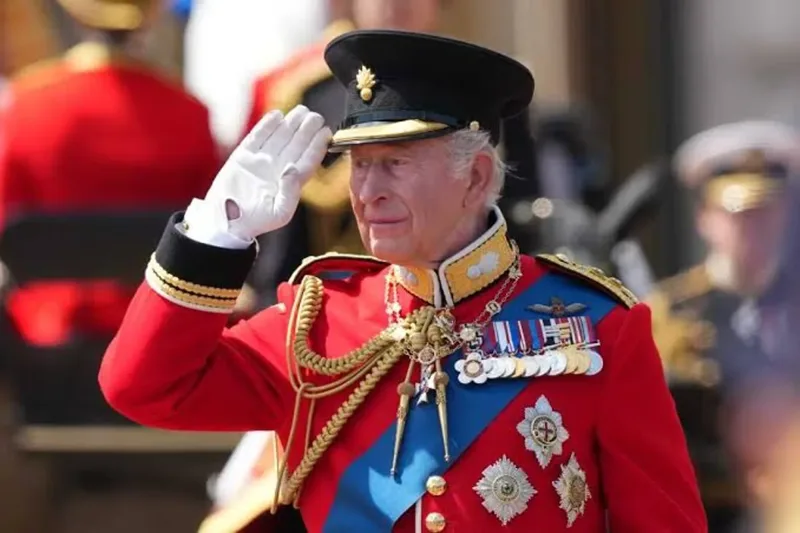
King Charles urged artificial intelligence leaders to confront the technology’s dangers on September 17, 2026, telling a gathering in Scotland that decisions made now would shape the lives of future generations.
The meeting at Dumfries House in East Ayrshire included representatives from Nvidia, Anthropic, Google DeepMind and OpenAI, the Press Association reported.
Charles warned about AI falling into the wrong hands and asked those developing it to ensure that “our humanity remains sacred”.
Britain’s AI minister and an adviser to the Vatican on AI ethics were among the guests, bringing government and ethical perspectives into a discussion often dominated by technology companies.
What industry leaders said
In the same Press Association report, Nvidia chief executive Jensen Huang said companies should strengthen testing and security before releasing products, and hold back systems that are not ready. His comments put a practical question alongside the King’s warning: what evidence should a company require before deployment?
That is a statement of responsibility, not evidence that all participants adopted a common testing standard. The reports cited here do not establish a shared release threshold or an enforcement mechanism.
A royal appeal, rather than a new rule
The significance of the gathering lies in who was brought together. Charles can use the monarchy’s convening role to press companies on responsibility, but a speech is not itself a new safety law or an enforceable industry agreement.
Reuters reported that the King called for rigorous safeguards and highlighted warnings emerging from AI developers themselves. His message was that progress should serve people, communities and the natural world.
The National reported that the event was held under the auspices of the Ditchley Foundation. Charles had previously addressed the 2023 AI summit at Bletchley Park by video.
The immediate test is whether the discussion produces concrete commitments. The remarks alone do not establish that the companies agreed to new restrictions or a slowdown.
The policy debate is also reaching everyday devices: Australia is considering smart-glasses restrictions in government workplaces, where recording raises privacy and security concerns.
How AI safety commitments can be assessed
For readers following the practical side of this debate, our explainer on Anthropic and Accenture’s evaluation partnership examines access, funding and reporting rights. Those questions help distinguish a public appeal for safeguards from a testing arrangement whose results can be examined.
Follow the technical and policy debate in our Technology section, or browse royal coverage in Royals.