
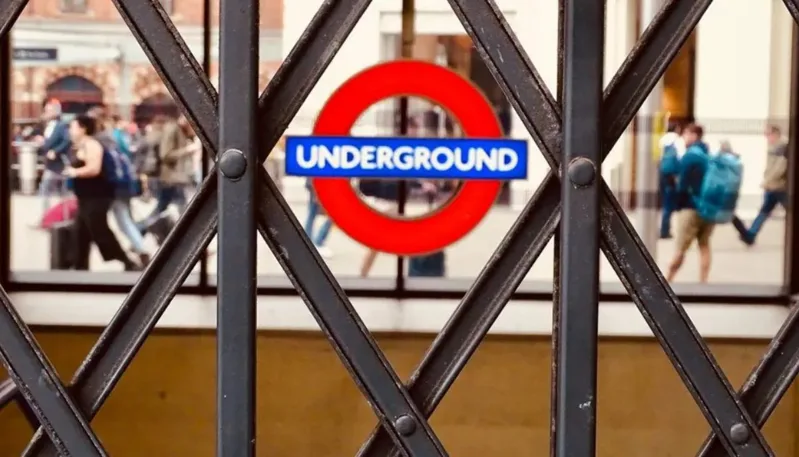
Thousands of London commuters are facing significant travel disruption today as a 24-hour strike by London Underground workers affects services across the capital. The industrial action, organized by the Rail, Maritime and Transport (RMT) union, has led to reduced services, station closures and severe delays on several Tube lines, forcing passengers to seek alternative routes during one of the busiest travel days of the week.
While some Underground services continue to operate, Transport for London (TfL) has warned that trains may be less frequent, stations could become overcrowded and journeys may take considerably longer than usual. The strike has particularly impacted key sections of the London Underground network. The Piccadilly and Circle lines are among the worst affected, with little to no service operating for much of the day. Parts of the Central and Metropolitan lines have also been suspended, while the Northern, Jubilee and District lines continue to run with reduced services and potential delays.
Despite the disruption, several major transport routes remain operational. The Elizabeth line, London Overground and Docklands Light Railway (DLR) are running normally and are expected to absorb much of the displaced passenger demand. TfL has advised commuters to check their routes before travelling and to allow extra time for journeys. Transport officials have also warned that bus services and alternative rail routes are likely to experience heavier-than-normal passenger volumes throughout the day.
The strike stems from an ongoing dispute between the RMT union and London Underground management over proposed changes to working arrangements for Tube drivers and staff. Union representatives argue that the changes could negatively affect working conditions, while transport authorities maintain that reforms are necessary to improve operational efficiency.
The latest walkout is expected to affect millions of journeys across the capital and comes amid continued concerns over staffing levels and funding pressures facing London's transport network.
Business groups have also expressed concerns about the economic impact of repeated transport disruptions, warning that strikes can affect productivity, retail footfall and tourism across central London.
For many commuters, today's disruption serves as a reminder of the capital's heavy reliance on its Underground system, which carries millions of passengers every week and remains the backbone of London's public transport infrastructure. TfL says it is working to restore normal service levels as quickly as possible once the strike concludes, but some disruption may continue into the following morning as trains and staff return to their regular schedules.
Passengers are encouraged to monitor live service updates before travelling and consider alternative routes where possible.