
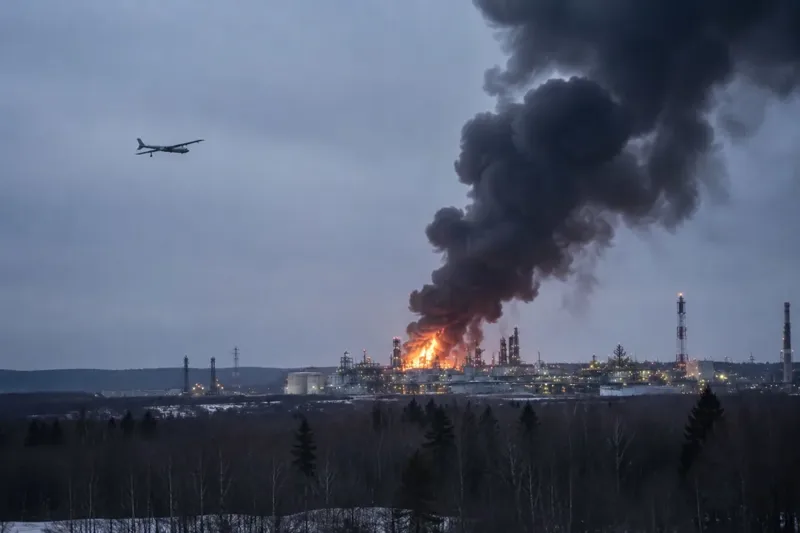
The war between Ukraine and Russia has entered another important phase after reports claimed that Ukrainian drones reached Siberia, one of Russia's most distant regions. If confirmed, it would show that Ukraine is now capable of striking targets thousands of kilometres away from the front lines.
According to reports, the drones were aimed at locations connected to Russia's energy industry. These facilities play a major role in producing, storing, and transporting oil and gas, making them valuable targets because they help support the country's economy.
Military experts say long-range drone attacks have become an increasingly important part of the conflict. Unlike traditional aircraft, drones are generally smaller, less expensive, and can travel long distances while carrying out surveillance or precision strikes. Their growing use has changed how both countries conduct military operations.
Siberia is known for its vast oil and gas reserves and contains many important energy facilities. Although it is located far from the battlefield in eastern Ukraine, it has become more relevant as both sides try to weaken each other's military and economic capabilities.
If energy infrastructure is damaged, repairs can take time and may temporarily affect fuel production or transportation. However, the actual impact depends on the size of the attack and the extent of any damage. Officials usually inspect affected sites before releasing detailed information.
The reported strike also highlights the changing nature of modern warfare. In previous conflicts, distance often protected important facilities from attack. Today, improvements in drone technology allow military forces to reach targets much farther away than before, making even remote regions more vulnerable.
Russia has invested heavily in air defence systems designed to detect and intercept incoming drones and missiles. At the same time, Ukraine has continued developing longer-range drone capabilities as part of its military strategy. This ongoing competition has become one of the defining features of the war.
Military analysts say attacks on energy facilities are often intended to reduce an opponent's ability to support military operations while also placing economic pressure on the government. Energy exports remain an important source of revenue for Russia, making such facilities strategically significant.
The reports have also drawn international attention because any escalation involving critical infrastructure increases concerns about regional stability. Governments around the world continue to monitor developments closely, as the conflict has already affected global energy markets and international security since it began.
At the time of writing, officials from both countries continue to provide updates about military operations, while independent verification of every reported strike remains difficult because of the ongoing conflict and restrictions on access to affected areas.
As the war continues, long-range drone operations are expected to remain an important part of military strategy. The reported reach into Siberia demonstrates how advances in technology are reshaping modern warfare, allowing conflicts to extend far beyond the traditional battlefields.