
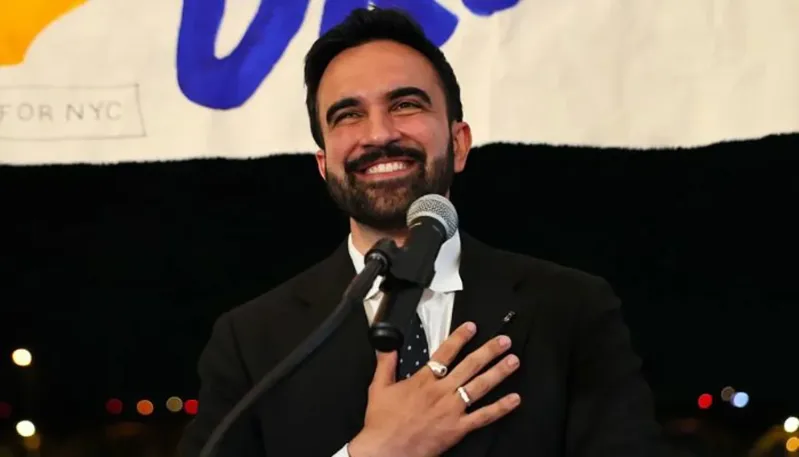
New York City Mayor Zohran Mamdani has ordered cease-and-desist notices against 42 retailers — including Amazon, Walmart, Temu, and Target — for selling illegal high-speed e-bikes, giving them until August 18 to comply or face fines of $2,000 per violation. On its surface, this reads like a standard safety crackdown following a tragedy. Look closer, though, and it's a deliberately narrow move that says as much about what Mamdani is choosing not to do as what he is doing — and it fits a pattern he's been building since taking office.
The Trigger
The immediate catalyst was the death of 17-year-old Gabriel Nacato, killed near City Hall while riding a Deepower QS7 e-bike capable of hitting 30 mph — double the city's 15 mph legal limit for e-bikes in bike lanes. His death wasn't an outlier. According to figures from Mamdani's own office, 45 riders died between 2017 and 2025 on illegal e-bikes capable of exceeding 25 mph, accounting for more than half of all e-bike rider deaths in that period. E-scooters show a nearly identical pattern: 14 of the roughly 27 scooter deaths in the same window involved devices that could break the legal 20 mph cap.
The devices targeted are specifically those with motors exceeding 750 watts — hardware that lets them blow past any speed limit New York sets, regardless of how the rider chooses to operate it.
What Mamdani Is Deliberately Not Doing
Here's the part easy to miss in a quick read: this crackdown targets manufacturers and retailers, not the roughly 80,000 e-bike delivery workers who use these devices daily to earn a living — most of them immigrants working in one of the city's most physically demanding gig-economy jobs. That's not incidental. It's consistent with a position Mamdani staked out well before taking office, when he argued that the way to make streets safer is to stop delivery apps from algorithmically pressuring riders into unsafe decisions, rather than punishing the workers those algorithms are pushing.
He's followed through on that logic since being sworn in. In March, his administration ended a previous policy — inherited from the Adams administration — of issuing criminal summonses to delivery workers and cyclists for minor traffic infractions, a policy delivery-worker advocates had criticized as punishing people for behavior largely shaped by the economic pressure of app-based pay structures. Around the same time, City Hall sent formal warnings to gig-economy delivery apps reminding them of their obligations under the city's worker protection laws, and has been pushing for legislation requiring apps to report trip-level delivery data, safety incidents, and worker penalties directly to the Department of Transportation.
Ligia Guallpa, executive director of the Worker's Justice Project and co-founder of the delivery-worker advocacy group Los Deliveristas Unidos, has made the underlying argument explicitly: delivery workers depend on e-bikes to earn a living in an exploitative, poorly supported job, and with little real support from the apps that employ them, many end up buying whatever illegal, unsafe vehicle is cheapest and most available.
The Political Fight Happening Alongside It
This crackdown isn't happening in a vacuum — it's unfolding alongside, and in some tension with, a parallel push from City Council Speaker Julie Menin, who a day before Mamdani's retailer notices announced a package of 17 bills covering e-bike safety, street design, delivery worker protections, and mandatory data reporting. One proposed bill would go further than Mamdani's retailer-focused approach by banning the sale of Class 3 e-bikes (throttle-assisted models capable of 25 mph) outright. Menin and Mamdani have clashed on other policy fronts before — the city budget, housing vouchers, and public safety funding among them — and this is shaping up as another arena where the mayor's office and the Council are pursuing safety through different mechanisms: Mamdani focused on the supply chain that puts illegal hardware on the street, Menin's Council pushing a broader legislative framework that includes outright sales bans.
Why the Framing Matters
The real story here isn't "mayor cracks down on scooters." It's a mayor trying to thread a genuinely difficult needle: responding to real, rising fatalities without criminalizing the immigrant workforce that New York's food-delivery economy depends on — while an app industry that sets the pay incentives driving unsafe riding faces comparatively little direct pressure so far, beyond warning letters and a push for more data transparency. Whether cutting off illegal hardware at the retail level meaningfully reduces deaths without parallel action on delivery-app incentive structures is the open question this policy will be tested against over the coming months.