
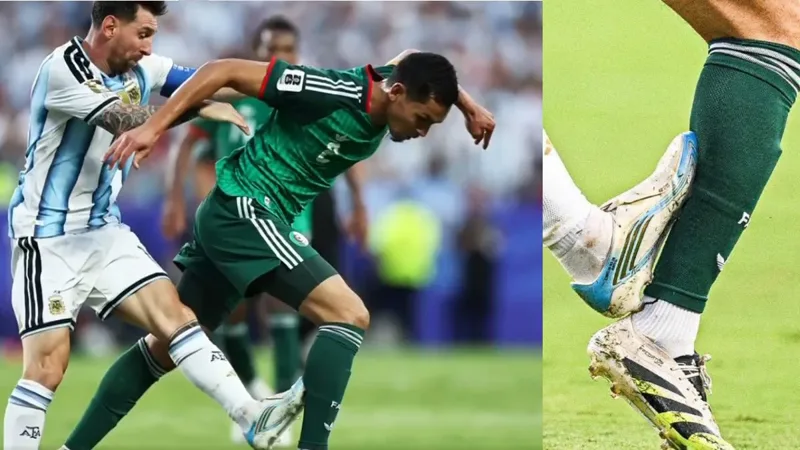
Lionel Messi's hat-trick against Algeria may have rewritten World Cup history, but a controversial challenge on defender Aissa Mandi has sparked criticism from football pundits, former players and refereeing experts.
The Argentina captain scored all three goals in his side's 3-0 victory over Algeria in Kansas City, drawing level with Miroslav Klose's all-time World Cup goals record. However, much of the post-match discussion centered on an incident in the first half when Messi appeared to catch Mandi on the calf with his studs during a challenge.
The referee awarded a foul but did not show a card, while VAR chose not to intervene, a decision that immediately divided the football world.
Former footballers Ale Moreno and Nedum Onuoha were among the strongest critics of the decision. Speaking on ESPN, the pair argued that Messi should have been sent off for the challenge.
"It's 100% a red card for Lionel Messi. It should've been," Moreno said, while Onuoha agreed that the challenge warranted a dismissal.
Former Premier League referee Mark Halsey also questioned the decision, describing the challenge as dangerous and expressing surprise that VAR did not recommend an on-field review. Halsey argued that the incident endangered the safety of the Algerian defender and said football's laws should be applied consistently regardless of a player's status.
Not everyone focused on the controversy, however.
Algeria defender Aissa Mandi, the player involved in the incident, chose to praise Messi's performance after the match. Speaking to reporters, Mandi described the Argentine star as "perhaps the greatest player of all time" and acknowledged the difficulty of containing him throughout the game.
Argentina coach Lionel Scaloni also focused on his captain's historic display, while teammate Rodrigo De Paul praised Messi's continued influence on the world stage following another record-breaking performance.
The debate has also spread across social media, where fans remain sharply divided. While some insisted the challenge deserved a straight red card, others argued the contact was accidental and did not meet the threshold for a dismissal.
Neither Messi, FIFA nor referee Szymon Marciniak have publicly addressed the controversy.
With Argentina preparing for its next Group J fixture, the incident is likely to remain one of the most talked-about refereeing decisions of the early stages of the 2026 FIFA World Cup.