
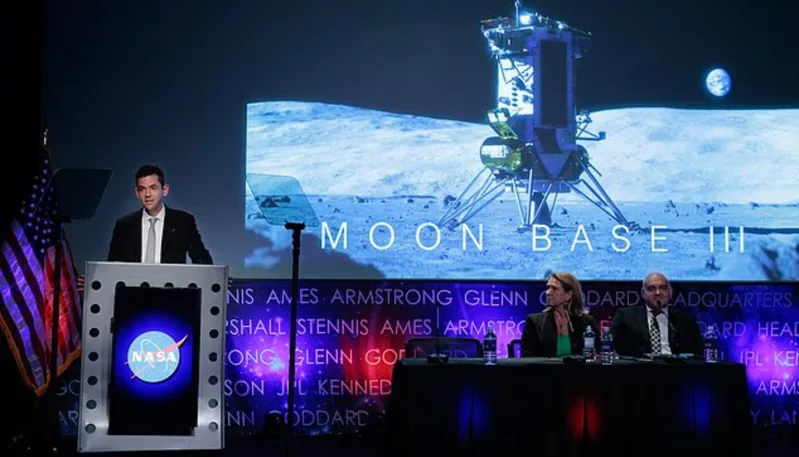
NASA has announced an ambitious plan to begin construction of a “city on the Moon” by the end of this year, marking one of the most significant steps yet in humanity’s push toward long-term lunar habitation.
The U.S. space agency outlined that the project will focus on developing a permanent outpost on the lunar surface, with an estimated cost of around $20 billion. According to NASA officials, the initiative will be rolled out in phases, with the first stage expected to continue through 2029.
NASA Administrator Jared Isaacman said the early phase will center on “learning, testing, and building” key infrastructure needed for sustained human presence on the Moon. He emphasized that the project represents a long-term commitment rather than a short-term mission.
“America is returning to the Moon — and this time, to stay,” Isaacman said, highlighting NASA’s goal of establishing a permanent presence beyond Earth.
The agency’s broader roadmap includes developing a fully functional lunar settlement by 2032. In preparation, NASA plans to increase commercial lunar missions over the next few years to identify suitable landing zones and test emerging space technologies.
Officials also noted that the Moon’s extreme environment presents major challenges for permanent settlement, describing it as both scientifically valuable and highly hostile to human life. Despite these conditions, NASA believes sustained exploration and infrastructure development are now within reach.
As part of the early rollout, the first mission phase is expected to begin in the autumn, when Blue Origin is scheduled to launch its Blue Moon Mark 1 lander, named Endurance. The mission will play a key role in testing landing systems and surface operations.
However, recent technical setbacks, including a reported explosion during a Blue Origin rocket test, have raised questions about possible delays in upcoming lunar missions.
NASA also plans to deploy a range of robotic systems on the Moon by 2029, including uncrewed rovers and specialized exploration drones designed to search for water and other natural resources essential for future human survival.
The announcement underscores a renewed global push toward deep space exploration, as NASA, private companies, and international partners compete to establish the first sustained human presence on the Moon.