
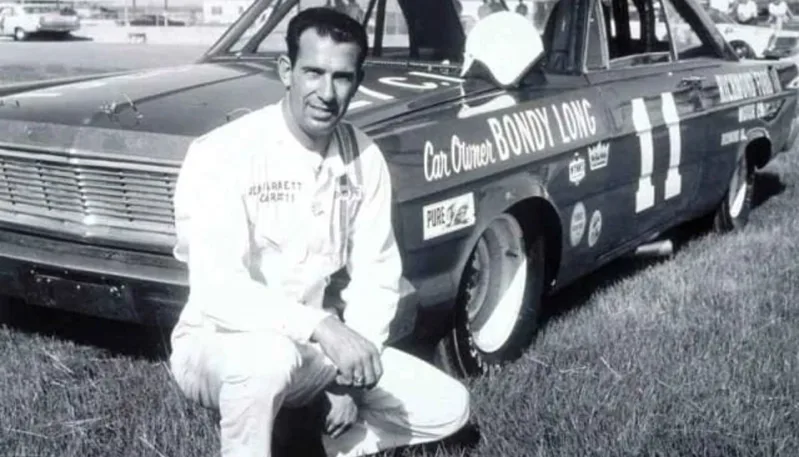
NASCAR is reflecting on the legacy of a figure who helped define its identity both on and off the track.
Ned Jarrett, a Hall of Fame driver and one of the sport’s most recognizable broadcasting voices, has died at the age of 93.
His passing marks the end of an era that stretched across decades of transformation in American motorsport—from raw, regional stock car racing to a globally followed professional sport.
A career built on control, not chaos
Jarrett’s story was never just about speed. It was about precision, patience, and consistency at a time when NASCAR was still defined by unpredictability.
Behind the wheel, he became known for something rare in racing: calm dominance. He did not chase spectacle. He built results.
That approach carried him to the highest level of the sport, where he became a two-time NASCAR Cup Series champion and one of the most respected competitors of his generation.
From driver to defining voice
When his driving career ended, Jarrett didn’t leave the sport—he reshaped how it was heard.
As a broadcaster, he became one of NASCAR’s most trusted voices, bringing clarity to a sport built on speed and noise. His commentary style was measured, simple, and direct, reflecting the same discipline he once brought to the track.
For many fans, he didn’t just describe races—he helped them understand them.
A legacy that spans generations
Jarrett’s influence extended far beyond statistics or championship titles. He helped bridge two different eras of racing:
- the early, dangerous days of stock car competition
- and the modern, media-driven era of professional motorsport
Few figures remained relevant across both worlds in such a complete way.
Why his impact still matters
NASCAR today is a global entertainment machine, shaped by television, data, and technology. But voices like Jarrett’s remain central to its identity.
He represented a time when racing was as much about discipline as it was about speed—and when storytelling was just as important as the finish line.
The final lap
With his passing at 93, NASCAR loses not just a Hall of Famer, but one of its most enduring interpreters.
The cars will keep moving. The seasons will continue.
But one of the sport’s most defining voices has now left the track.