
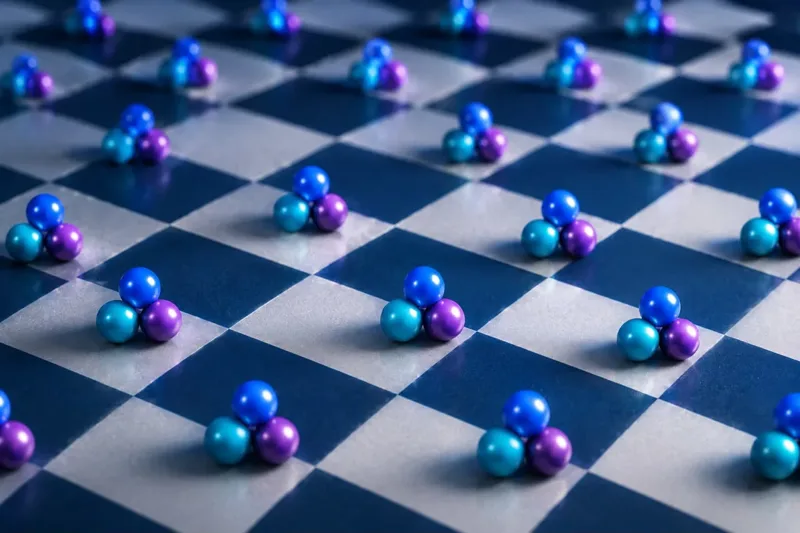
Physicists have presented a new theory explaining how groups of three quantum particles self-organize in very ordered checkerboard-type structures, which has been challenging to explain until now.
It is common for particles like atoms and electrons to show strange behavior, thanks to the principles of quantum mechanics. But according to the new study, in some specific circumstances, particles in groups of three may naturally form repeatable and stable patterns rather than showing randomness.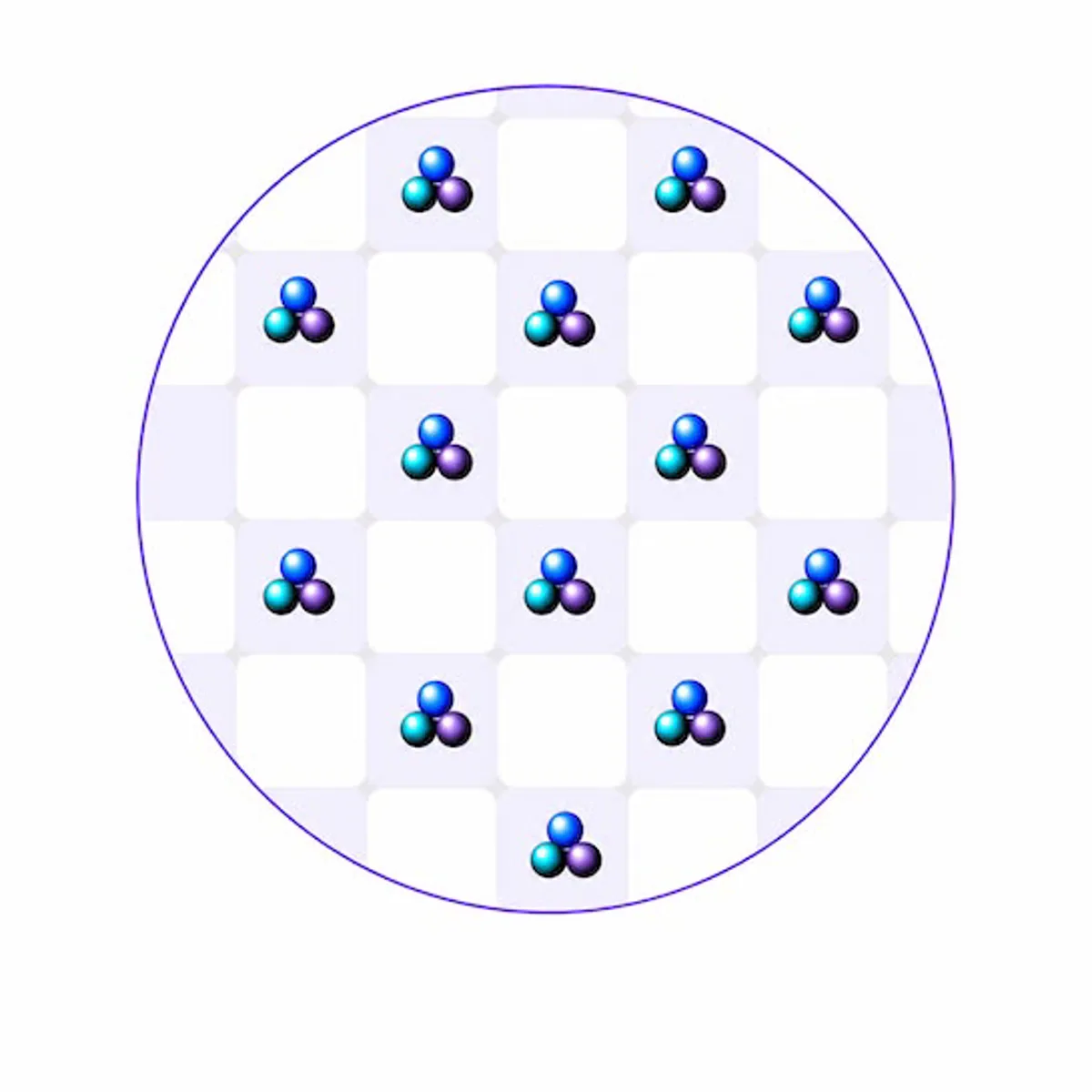 The researchers say that this discovery will provide a new understanding of quantum systems. Even though these patterns emerge at a very small scale, understanding them will help in creating more helpful quantum technology in the future, which includes quantum computers, sensors, and material technology.
Also, the theory provides a good base for researching multi-particle quantum states, which is a major problem in today’s physics. Future experimental studies will focus on testing this prediction in laboratory settings.
While the research is still in its early stages, scientists believe it could provide valuable insights into the hidden rules that manage the quantum world and open new directions for future discoveries.