
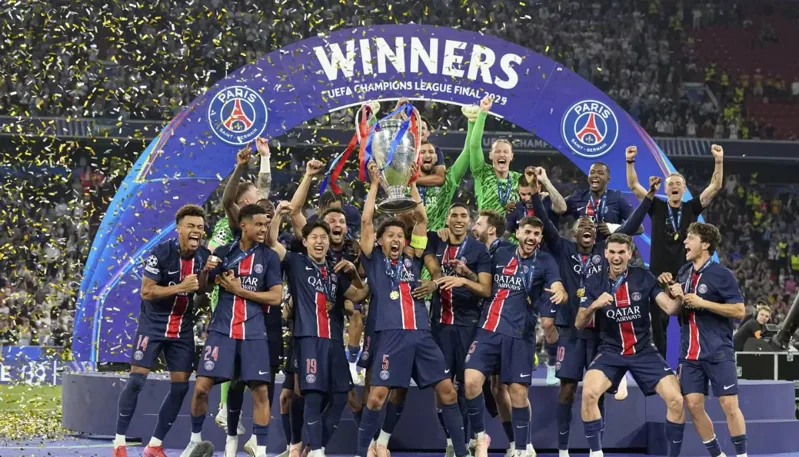
Paris Saint-Germain’s long-awaited Champions League triumph is being seen as more than just a trophy win — it is the symbolic end of football’s most expensive and closely watched “superteam experiment.”
For over a decade, PSG built squads filled with global superstars, investing heavily under Qatar Sports Investments in pursuit of European glory. Names like Neymar, Lionel Messi, and Kylian Mbappé turned Paris into one of football’s most glamorous destinations, but also one of its most scrutinized projects.
Despite domestic dominance, European success repeatedly slipped through their fingers, fueling criticism that PSG were a collection of stars rather than a functioning team. Every season brought the same question: can money buy the Champions League?
Now, after finally lifting Europe’s biggest trophy, the narrative has shifted — but not in the way many expected.
This victory is being framed less as a sudden breakthrough and more as the result of a gradual transformation. Instead of relying solely on individual brilliance, PSG’s latest success reflects structure, balance, and tactical discipline — a quieter evolution away from the “galáctico” identity that defined their earlier years.
Football analysts are already calling it the end of an era: not just PSG’s rise, but the end of the belief that assembling the world’s biggest names guarantees European dominance.
Ironically, the win has also reopened debate about the club’s identity. Was PSG’s long-term strategy a failure until now — or was this always the intended outcome of sustained investment and rebuilding?
For critics, it is proof that even the most expensive football project in history needed time, patience, and restructuring to succeed. For supporters, it is vindication — the final payoff after years of heartbreak, near misses, and reinvention.
In Paris, celebrations have spilled into the streets, marking a night many fans describe as the most important in the club’s history. Beyond the trophy itself, the emotional weight of finally conquering Europe has redefined what PSG represents in modern football.
Whatever side of the debate one takes, one thing is now clear: the era of PSG as football’s unfinished experiment may finally be over.