
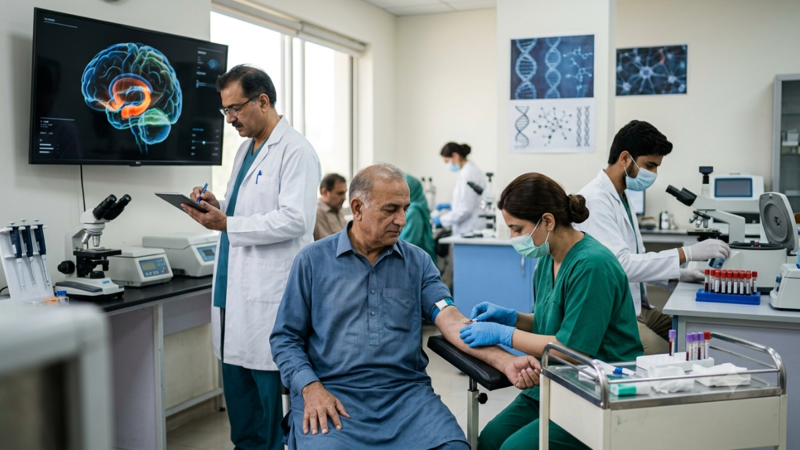
A breakthrough blood test has been invented by scientists which can predict when the onset of Alzheimer's disease will occur. The scientists say that this invention can prove beneficial in detecting patients who are at risk of suffering from this disease much earlier.
Alzheimer's disease is one of the major forms of dementia and is prevalent all over the world. Alzheimer's disease causes damage to brain cells and causes difficulties related to memory, thinking, language and daily functioning of the body. However, as symptoms of this disease are generally noticed after several years have passed by, it becomes difficult to detect the disease before any major damage has occurred.
This particular test focuses on specific proteins that are present in blood stream. Scientists say that there is some kind of change in the presence of these proteins long before the symptoms of this disease occur. With the help of this biological indicator, doctors will be able to identify patients who are at risk of suffering from Alzheimer's disease.
According to the research funded by the NIH, the blood test would be able to determine the onset of symptoms more accurately than most available diagnostic methods. Experts suggest that such knowledge will allow patients and their relatives to better prepare for the future and allow physicians additional time for monitoring the condition of the brain and beginning treatment in good time.
Today, diagnosing the presence of Alzheimer's disease typically requires conducting brain scans, taking spinal fluids, evaluating memory, and conducting a physical examination of the patient. Although all these procedures yield useful information about the state of health, they can be quite costly, invasive, and not easily available in most healthcare institutions. Blood test will make early detection of the disease quicker and more accessible.
As reported by the scientists, the procedure is based on the analysis of certain proteins which are directly connected to the accumulation of amyloid plaques and tau tangles in the brain abnormalities that are recognized as a sign of Alzheimer's disease. The proteins start changing well before symptoms appear, thus making it possible to diagnose the disease at an earlier stage.
According to professionals, early detection is becoming crucial nowadays as recent Alzheimer's drugs prove to be effective if administered at an early stage before significant damage to the brain occurs. Early detection can help develop an adequate treatment plan, promote healthy changes in lifestyles, and help people participate in clinical trials of new drugs.
Moreover, the blood test is believed to be beneficial for Alzheimer's research, enabling researchers to find suitable candidates for conducting further experiments and developing improved medications.
Though the findings are promising, medical experts point out that the blood test is still being examined and is not designed to serve as an alternative to current methods of diagnostics. Further research and clinical trials are necessary for its wider use in hospitals and health centers.
According to medical professionals, the findings are crucial for improving the process of diagnosing Alzheimer's disease. With further research, blood-based tests for Alzheimer's may become routine and help doctors diagnose the condition and significantly improve lives of many people worldwide.