
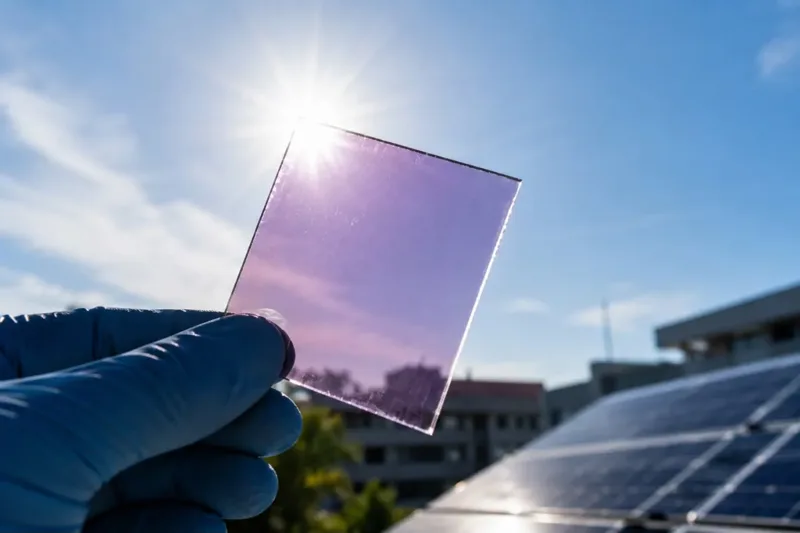
Researchers have developed a new material capable of converting ordinary sunlight into ultraviolet (UV) light, opening the door to a range of applications in science and technology.
Normally, sunlight contains only a small amount of UV radiation, while most of its energy comes in the form of visible and infrared light. The newly developed material is designed to convert some of that visible sunlight into UV light through a process known as photon upconversion, which allows scientists to harness energy that would otherwise go unused.
The breakthrough could benefit several industries. UV light is widely used for sterilizing medical equipment, purifying water, disinfecting surfaces, producing advanced chemicals, and manufacturing high-tech electronics. If UV light can be generated directly from csunlight, many of these processes could become more energy-efficient and environmentally friendly.
Scientists also believe technology could improve future solar-powered systems by expanding the ways sunlight can be used beyond traditional electricity generation. It may also help create self-powered devices that rely on natural sunlight instead of external energy sources.
While the material is still being studied before large-scale commercial use, researchers say the discovery represents an important step toward making solar energy more versatile. Further testing will focus on improving its efficiency, durability, and cost before it can be adopted for everyday applications.
If successful, the innovation could reshape how sunlight is used in medicine, manufacturing, environmental protection, and renewable energy, offering a new way to unlock the full potential of solar power.