
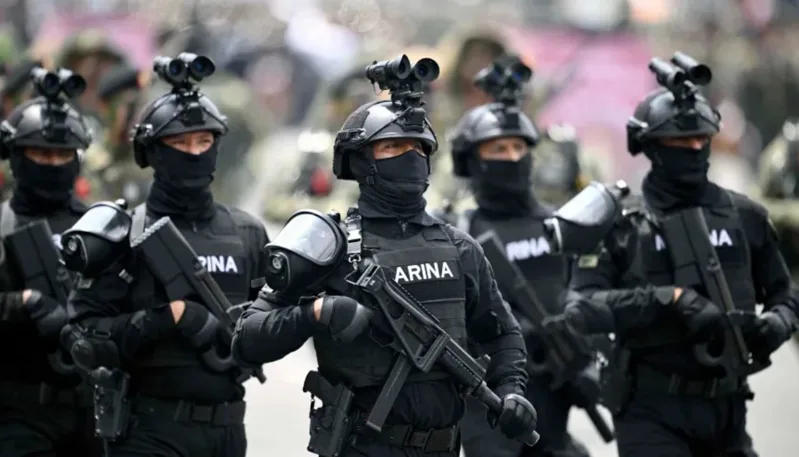
Mexico’s preparations to host matches during the 2026 FIFA World Cup have drawn renewed attention to security conditions in parts of the country, as authorities and international agencies prepare for an expected surge of football fans from around the world.
The tournament, which will be jointly hosted by the United States, Canada and Mexico, is expected to bring millions of visitors across North America. Mexico will stage 13 matches across multiple cities, making it one of the key destinations during the global event.
However, the scale of incoming travel has also intensified scrutiny of security risks, particularly in regions affected by organized crime activity and periodic civil disruptions.
Security concerns and travel advisories
The concerns were amplified after the U.S. Embassy in Mexico updated its travel guidance for American citizens ahead of the tournament period, urging visitors to exercise increased caution depending on the region they plan to visit.
The advisory reflects a broader assessment by U.S. authorities that security conditions in Mexico vary significantly from state to state. While many tourist and host city areas remain active and heavily policed, other regions continue to experience risks linked to organized crime, road safety issues, and localized violence.
Officials have not issued any World Cup-specific travel bans, but the guidance underscores the importance of careful planning, particularly for fans expected to move between multiple host cities.
Why security experts are watching closely
Security analysts say major international tournaments often bring a different kind of risk profile—not necessarily an increase in overall violence, but a sharp rise in travel density, overcrowding, and opportunistic crime targeting visitors.
With matches spread across cities, fans are expected to rely heavily on domestic flights, highways, and public transport systems, which could become congested during peak fixtures.
Experts also note that large-scale events can place additional pressure on local law enforcement and emergency services, especially in urban centres hosting multiple matches.
Other potential disruptions
Beyond security concerns, some analysts point to possible domestic disruptions such as protests or strikes that could affect transportation routes or public services during the tournament period.
While such actions are not unusual in Mexico, their timing during a global event could create logistical challenges for fans trying to reach stadiums or travel between cities.
Authorities are expected to coordinate between federal and local agencies to minimize disruption and maintain mobility in and around host venues.
What this means for fans
Despite the concerns, Mexico remains an official and fully active host of the 2026 World Cup, and preparations continue across all designated cities.
For fans planning to travel, experts stress that the key factor will be preparation—understanding local conditions, following official travel advisories, and planning routes and accommodation well in advance.
The bigger picture
The 2026 World Cup is expected to be the largest in history, with expanded teams and a record number of matches spread across three countries. That scale brings not only excitement, but also complex security and logistics challenges.
Mexico’s role as a host places it at the centre of both opportunity and scrutiny, as authorities work to balance global tourism with domestic security realities.
Mexico’s World Cup preparations are moving forward, but international advisories highlight that travel conditions vary across the country. While no restrictions are in place, officials are urging visitors to plan carefully and stay informed as one of the world’s biggest sporting events approaches.