
Suppose there’s a household which is looked after by parents who also have kids. Income of the household is low but expenses are high. Food, electricity, petrol, education, health, security, in fact each and everything requires money. To fulfill these needs of children, parents go to bank, again and again, to get monetary aid. This loan temporarily fulfills the need for money but once the funds empty, there is again the need to get the loan. This is a vicious cycle in which Pakistan is stuck!
Since 1958, Pakistan has taken loans from IMF 24 times! It happens after every 3-4 years; need for money, getting loan from IMF, money ends, need for money and again that toxic loop runs.
People ask why does this loop never end?
Every time Pakistan signs an agreement, IMF demands structural reforms like, tax base expansion, subsidy reduction, currency flexibility and privatization. Pakistan agrees to meet the conditions, gets the money, implements some reforms, and falls back once the pressure eases.
Pakistan keeps returning there because it consistently spends more than it earns. Taxes cover only 9-10% of the total GDP which is one of the lowest rates in the world. The gap is filled by borrowing money.
Another reason is that Pakistan imports far more than it exports. Over reliance on textiles, high production costs and lack of diversification in industries keep exports stuck.
Political instability also plays a huge role in execution of this loop. Each new government blames the previous one for economic mismanagement but no one implements the painful long term reforms needed!
But how can this loop ever end?
By expanding the tax base!
Supporting the poor with subsidies, not the entire population!
Reducing production costs!
Allowing long term policy continuity!
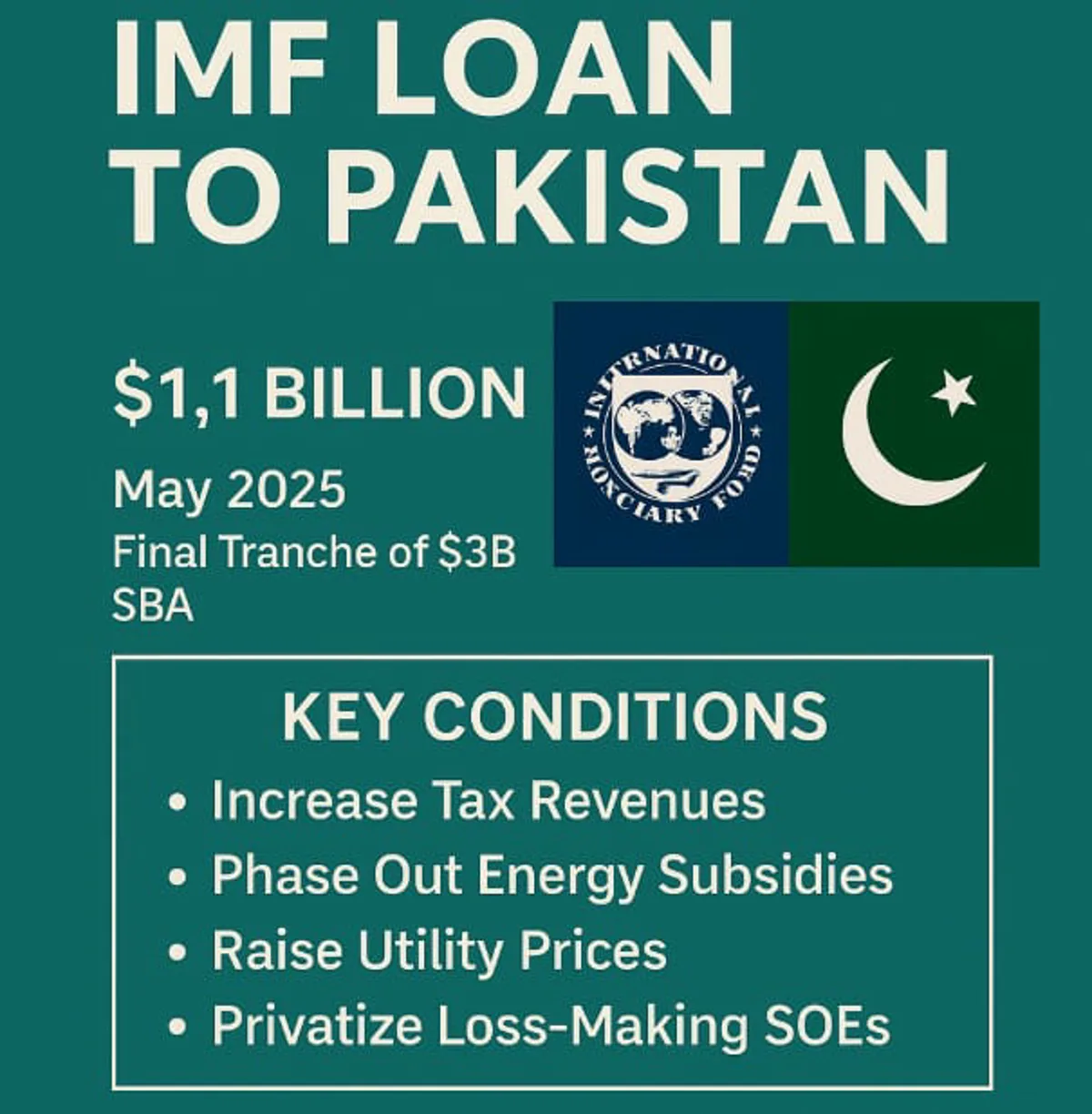
Pakistan has received over $50 billion from IMF across 24 agreements. If that money had been used to build infrastructure, industry and education, the country might not need IMF at all but knowing IMF will always rescue Pakistan removes the urgency for domestic reform. It’s easier to borrow than to fix the system!