
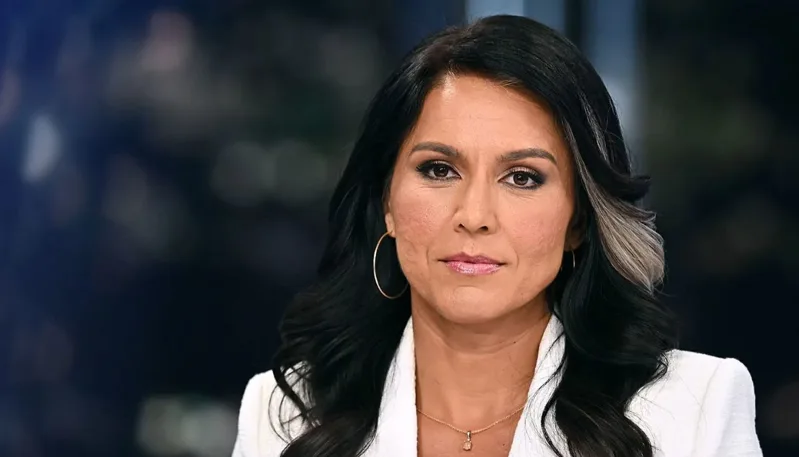
Tulsi Gabbard, the former Democratic congresswoman turned Republican intelligence chief under President Donald Trump, has resigned as Director of National Intelligence (DNI), marking the end of a controversial and closely watched tenure inside the administration.
Her resignation, set to take effect on June 30, 2026, comes at a moment of heightened internal tensions within the U.S. national security establishment and renewed debate over America’s foreign policy direction.
According to multiple reports, Gabbard cited personal reasons, specifically her husband’s diagnosis with a rare form of bone cancer, as the primary motivation for stepping down.
In her resignation letter to President Trump, Gabbard emphasized her decision was driven by her need to support her husband, Abraham Williams, during a serious medical crisis.
She wrote that continuing in such a demanding role was no longer possible while managing family responsibilities.
While the White House publicly praised her service and framed the departure as personal, several reports suggest her exit also reflects deeper institutional friction inside the administration.
Although Gabbard’s resignation is officially attributed to personal reasons, her time as DNI had been widely described as uneasy and politically complex.
1. Strained relationship with the White House
Gabbard, once seen as a surprising but strategic Trump ally, increasingly found herself at odds with senior officials over:
- Iran policy and military escalation
- Intelligence assessments on weapons programs
- The role of the intelligence community in shaping foreign policy decisions
Reports indicate that her analytical assessments were sometimes publicly dismissed, weakening her authority within the intelligence apparatus.
2. The Iran policy divide
One of the most significant fractures reportedly involved differing interpretations of Iran’s nuclear and missile capabilities.
Gabbard’s more cautious intelligence assessments clashed with the administration’s harder security posture, especially during escalating tensions in the region.
This disagreement became symbolic of a broader ideological tension: Gabbard’s anti-interventionist instincts versus a more aggressive national security strategy inside the Trump White House.
3. Institutional friction inside intelligence agencies
Her tenure also saw behind-the-scenes tensions with agencies such as the CIA and elements of the broader intelligence community.
Earlier in her term, disputes over authority, reporting structures, and oversight created what insiders described as an increasingly fragmented intelligence environment.
Gabbard’s resignation marks another dramatic turn in a political career defined by ideological shifts.
- Former Democratic congresswoman from Hawaii
- 2020 Democratic presidential candidate with an anti-interventionist platform
- Left the Democratic Party in 2022, criticizing it as an “elitist cabal of warmongers”
- Endorsed Donald Trump in 2024
- Joined the Republican Party later that year
- Appointed DNI following Trump’s return to office
Her appointment was initially framed as part of Trump’s effort to bring “outsider voices” into national security leadership.
During her tenure, Gabbard became one of the most polarizing figures in the intelligence community.
Key actions included:
- Aggressive restructuring of intelligence leadership
- Revocation of security clearances of former officials accused of politicization
- Support for internal reforms aligned with Trump’s national security agenda
Supporters viewed her as a reformer challenging entrenched bureaucracy. Critics saw her as destabilizing established intelligence norms.
By early 2026, multiple reports suggested Gabbard’s influence inside the administration was declining:
- Reduced visibility in key policy decisions
- Internal disagreements over Iran strategy
- Speculation about replacement discussions within the White House
Some accounts even described her position as increasingly symbolic rather than operational.
Gabbard’s departure is part of a broader pattern of turnover and instability in the Trump national security apparatus, reflecting:
- Policy divisions over foreign intervention
- Conflicts between intelligence assessments and political leadership
- Ongoing restructuring of U.S. intelligence priorities
Her exit leaves a temporary leadership gap, with the deputy DNI expected to serve in an acting capacity until a successor is named.
Tulsi Gabbard’s resignation closes one of the most unusual chapters in modern U.S. intelligence leadership.
She entered office as a political outsider aligned with Trump’s anti-establishment message, but her tenure evolved into a balancing act between:
- personal loyalty,
- institutional resistance,
- and deep ideological divides over U.S. foreign policy.
Ultimately, her departure underscores a recurring theme in Washington: even high-level reformers often collide with the institutional and political realities of the intelligence state they try to reshape.