
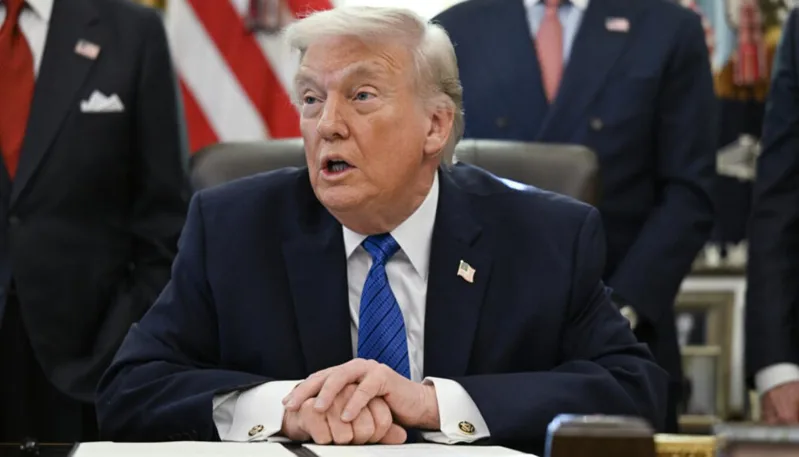
The Abraham Accords are a series of normalization agreements signed between Israel and several Arab nations during U.S. President Donald Trump’s first term, and the deal is once again becoming a major focus of his foreign policy agenda as he pushes for wider recognition of Israel across the Middle East.
The agreements were first announced in 2020 and led to the United Arab Emirates, Bahrain, Morocco and Sudan formally normalising relations with Israel under U.S. mediation.
Before the accords, many Arab countries had refused to recognise Israel officially, insisting that a Palestinian state must be established first. The agreements marked one of the biggest diplomatic shifts in the region in decades.
The Trump administration presented the accords as a breakthrough that could reshape Middle Eastern politics, security and trade by bringing Israel closer to Arab governments that had quietly cooperated for years behind the scenes.
The deals opened the door to direct flights, tourism, trade partnerships and security coordination between Israel and the participating Arab states.
Now, the expansion of the Abraham Accords is again being viewed as politically important for Trump as he seeks to strengthen his image as a dealmaker on the global stage during his second presidency.
A possible Saudi-Israel normalization agreement is seen as the biggest missing piece of the accords and could dramatically reshape regional alliances if achieved.
For Trump, expanding the agreement would not only deliver a major foreign policy win but also reinforce his longstanding claim that his administration can achieve results in the Middle East where previous presidents struggled.
The issue has gained even more attention following the recent escalation involving Iran, Israel and the United States, which has pushed regional security concerns back to the center of global diplomacy.
Analysts say Gulf countries increasingly view Iran’s growing influence and military reach as a shared concern, creating conditions where closer ties with Israel are becoming strategically more attractive despite public sensitivities around the Palestinian issue.
At the same time, the war in Gaza has complicated efforts to expand the accords, with anger across the Arab world making open normalization politically difficult for several governments.
Critics of the agreements argue the accords sidelined Palestinian statehood concerns in favor of security and economic interests, while supporters say they created a new framework for cooperation that could eventually stabilize the region.
Despite the controversy, the Abraham Accords remain one of the defining diplomatic achievements associated with Trump’s foreign policy legacy — and their future expansion could become a key test of Washington’s influence in the Middle East once again.