
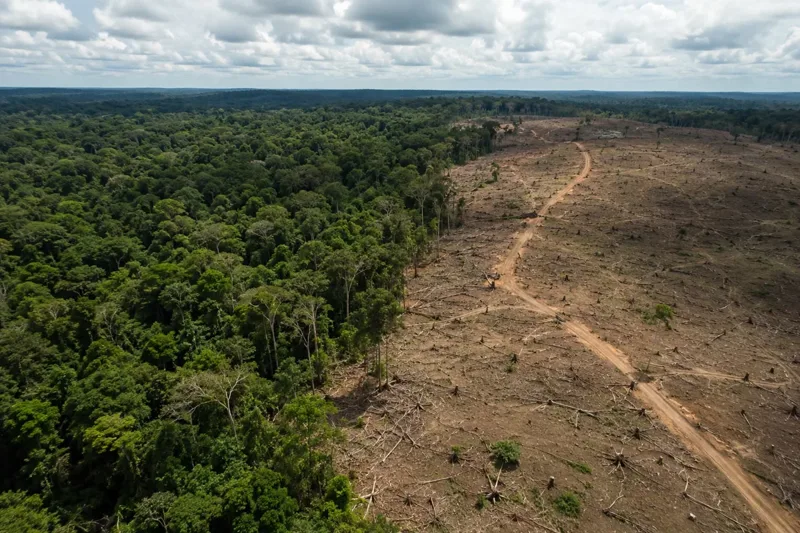
Brazil has announced that deforestation in the Amazon rainforest has dropped to its lowest level in ten years, offering hope for the future of one of the world's most important natural environments.
The Amazon rainforest in often called the "lungs of the Earth" because it absorbs huge amounts of carbon dioxide and helps produce oxygen. It is also home to millions of plant and animal species, many of which cannot be found anywhere else. Protecting the Amazon is considered essential in the global fight against climate changes.
According to recent environmental data, the amount of forest cleared in Brazil's Amazon has fallen significantly compared to previous years. The improvement is being linked to stronger government efforts to stop illegal logging, mining, and land clearing.
Officials say they have increased inspections, carried out more operations against illegal activities, and strengthened monitoring using satellite technology. These measures have helped authorities detect forest destruction more quickly and respond before larger areas are damaged.
Environmental experts have welcomed the news, saying it shows that government policies and law enforcement can make a real difference when properly implemented. They believe that protecting forests benefits not only Brazil but also the entire world because healthy forests help regulate the global climate.
The Amazon plays a major role in storing carbon that would otherwise enter the atmosphere as greenhouse gases. When forests are cut down or burned, that stores carbon is released, contributing to global warming. Reducing deforestation helps slow this process and supports international efforts to limit climate change.
The rainforest is also home to hundreds of indigenous communities who depend on the forest for their culture, food, medicine, and livelihoods. Many indigenous leaders have long called for stronger protection of their lands against illegal logging and land grabbing. Low deforestation rates may help preserve these communities and their traditional way of life.
Despite the positive progress, environmental organization warn that the work is far from over. Thousands of square kilometers of rainforest are still lost every year, and illegal activities continue in some remote regions. Experts say long-term success will require consistent enforcement, political commitment, and sustainable economic opportunities for local communities.
Scientists also point out that climate change itself remains a growing threat to the Amazon. Rising temperatures, longer droughts, and more frequent wildfires could damage the rainforest even if illegal deforestation continues to decline. Protecting the forest therefore requires both local conservation efforts and global action to reduce greenhouse gas emissions.
Many conversation groups hope this encouraging trend will continue in the coming years. If Brazil maintains stronger environmental protections while supporting sustainable development, the country could play a leading role in preserving one of Earth's most valuable ecosystems.
Although challenges remain, the latest figures suggest that meaningful progress is possible. For millions of people who rely on the Amazon and for those concerned about the future of the planet, the decline in deforestation is a welcome and hopeful sign.