
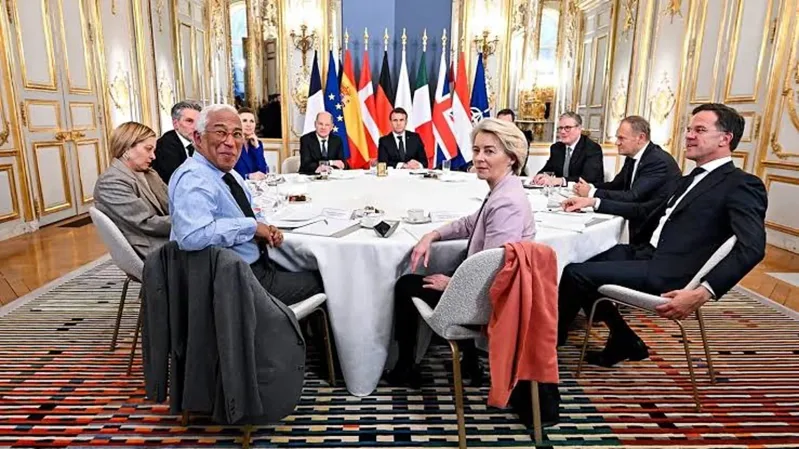
Leaders from across Europe met in Paris to reaffirm their support for Ukraine and coordinate future strategies, as the conflict between Russia and Ukraine continues to reshape the European security landscape. The summit was hosted by French President Emmanuel Macron, it served as a platform for discussions on strengthening military cooperation, increasing financial assistance and reassuring long term security for the region. Ukrainian President Volodymyr Zelenskyy participated in the meeting to update allies on the situation on the ground and to seek continued international support. The war has entered another challenging phase and concerns grow over cyber threats, economic pressures, and the broader implications of the conflict for Europe and the international community.
One of the primary objectives of the Paris summit was to reinforce Europe's commitment to supporting Ukraine. Since the beginning of the conflict, European nations have provided military equipment, humanitarian aid, financial assistance, and diplomatic backing to Ukraine. During the meeting, leaders discussed ways to maintain and expand this support while ensuring that Ukraine has the resources necessary to defend its sovereignty and protect its citizens.
One of the primary objectives of the Paris summit was to reinforce Europe's commitment to supporting Ukraine. Since the beginning of the conflict, European nations have provided military equipment, humanitarian aid, financial assistance, and diplomatic backing to Ukraine. During the meeting, leaders discussed ways to maintain and expand this support while ensuring that Ukraine has the resources necessary to defend its sovereignty and protect its citizens.
Additionally, cybersecurity emerged as a major topic of discussion. France and Germany recently summoned Russian ambassadors following allegations that Russian intelligence agencies were involved in cyberattacks targeting European institutions and government networks. Although Russia has denied the allegations, the incidents have heightened concerns about digital security across Europe. Participants at the summit discussed strengthening cybersecurity cooperation, improving intelligence sharing, and investing in technologies capable of detecting and responding to future cyber threats. Another important issue addressed during the meeting was the long-term security framework for Europe. Leaders examined ways to enhance cooperation between European countries and NATO while ensuring that Ukraine remains closely connected to Western security institutions. They also discussed the continued implementation of economic sanctions against Russia and their impact on limiting Moscow's military capabilities. The summit also explored Ukraine's future reconstruction efforts. Years of conflict have caused extensive damage to infrastructure, housing, schools, hospitals, and transportation networks. Throughout the discussions, leaders emphasized that diplomacy remains an essential component of resolving the conflict.
Political analysts view the Paris summit as a demonstration of European unity during a period of continued uncertainty. The meeting has sent a clear message that European countries remain committed to working together despite economic challenges, security concerns, and evolving geopolitical tensions. The discussions also reflect Europe's broader effort to strengthen collective defense while preparing for future security challenges beyond the current conflict.
The decisions and commitments made in Paris are expected to influence European policy and international relations in the months ahead, reinforcing the message that unity remains essential in responding to ongoing global security challenges.