
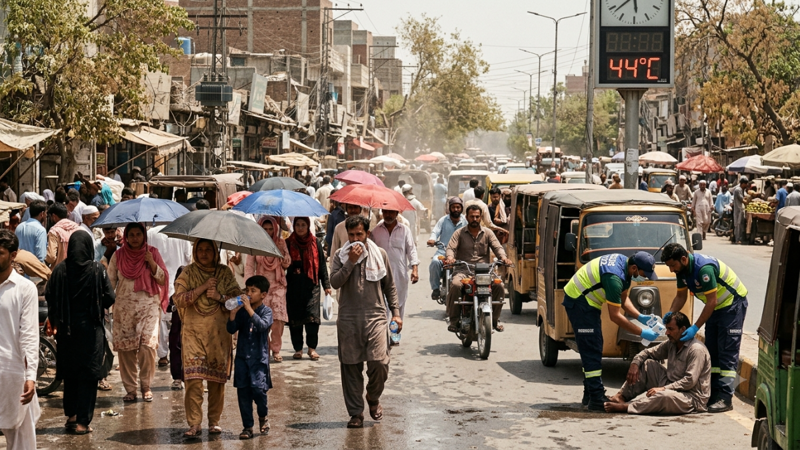
An international study conducted recently has shown that the problem of heat stress is expanding all over the world at a rate not anticipated before. According to researchers, an increasing trend in global warming due to climate change is causing the heat stress phenomenon to become more common, prolonged and harmful to people's health.
Heat stress refers to the inability of the human body to regulate its temperature and cool down properly. In usual circumstances, the human body cools itself with the help of sweat evaporation. However, under extreme heat and humid conditions, the normal cooling system fails, and the temperature of the body can quickly increase, leading to dehydration, heat exhaustion, and even fatal heat stroke.
The research team has noted that there is an increasing trend in terms of the number of days of heat danger around the globe. The study showed that heat stress is becoming common not only in traditional places. In some countries where heatwaves used to occur once in a while, there are more prolonged heatwaves.
According to scientists, one of the primary causes of this phenomenon is climate change. With the continued emission of greenhouse gases into the atmosphere, the temperature on Earth keeps rising. There are longer periods of summer seasons, more frequent hot days, and even warmer nights, which means that the human body does not have enough time to recuperate from the effects of high temperatures during the day.
According to research conducted by scientists, humidity is one of the main factors that cause heat stress. The increased level of humidity in the air prevents evaporation of sweat, which leads to heat exhaustion. Even temperatures that do not seem to be extremely high can be dangerous under such conditions.
It should be noted that there are groups of individuals whose health is at significantly higher risk during the periods of extreme heat. Older adults, children, pregnant women, people working outdoors, and those who have chronic illnesses like heart disease, diabetes, asthma, or kidney disease are particularly sensitive to heat.
According to scientists, heat stress may affect not only physical but also psychological condition of people. Prolonged stay in high temperatures can lead to decreased concentration, increased tiredness, poor mental condition, reduced productivity, and even accidents. More emergency cases related to dehydration, difficulty breathing, heart-related illnesses, and others are registered in hospitals during major heatwaves.
Scientists also draw attention to the specific phenomenon known as the urban heat island effect. Buildings, asphalt, and other urban materials trap the heat during the daytime and thus make cities much hotter than rural areas nearby. Limited amount of greenery and the presence of traffic may contribute to higher temperatures in cities, especially at night.
Scientists give some recommendations on how to minimize the chances of having heat-related illnesses. They recommend drinking enough water, staying indoors during the hottest hours of the day, wearing clothes of light colors and thin material, using fans and air conditioners if it is possible, and checking up elderly relatives and neighbors. Besides, it is important to pay attention to the weather forecasts and warnings.
The experts say that it is imperative that the governments and the people start preparing themselves for an eventuality where extreme heat will become frequent in the coming days. This includes measures like expansion of the early warning system, increased availability of cooling centers, more planting of trees in cities and spreading more awareness regarding the hazards of heat stress.
While it may require further study to know the long-term repercussions of warming on human beings, it is safe to say at this point that heat stress is emerging as one of the fastest growing health hazards associated with climate change.