
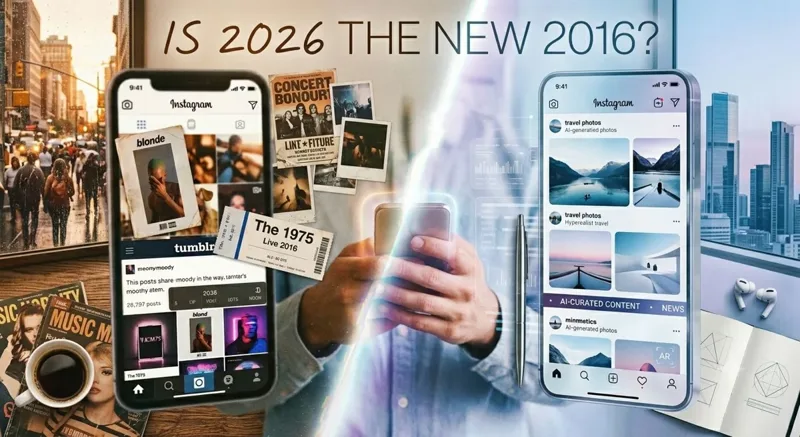
In a rare, hyper-accelerated loop of collective memory, a singular question is taking over our feeds: Is 2026 becoming the new 2016? What started as a few nostalgic posts has mutated into a profound cultural shift.
To understand why 2026 is trying so hard to be the new 2016, It is necessary to look back at the past surface trends, of how that era actually felt like. the twilight of the "human internet", a window defined by the sepia-toned warmth of original Instagram, raw Snapchat stories, and the moody, unpolished curation of Tumblr. Musically, it felt like an atmospheric gold rush, anchored by the emotional vulnerability of Frank Ocean’s Blonde, the cinematic romance of Lana Del Rey, and the neon-lit synth-pop of The 1975.
Today’s internet feels corporate and over-engineered. Every feed feels like a boardroom calculation. Users are abandoning hyper-visible public performance to retreat into the shadows of the web, dumping raw, blurry, low-exposure snapshots onto secondary archive accounts and adopting a quiet, lowercase aesthetic that refuses to perform for likes. In a world where we constantly question if art or a human voice is AI-generated, 2016 stands as a monument to a digital world that was still messy, beautifully flawed, and undeniably real.
Ultimately, the desire to make 2026 look like 2016 is a symptom of collective digital burnout. By turning away from a hyper-optimized future and embracing the raw, cinematic moods of a decade ago, this generation is staging a quiet protest. They are proving that no matter how advanced technology becomes, human beings will always crave grace over optimization, and genuine feeling over flawless code. We aren't just nostalgic for a calendar year; we are homesick for a version of the internet that felt a little more human.