
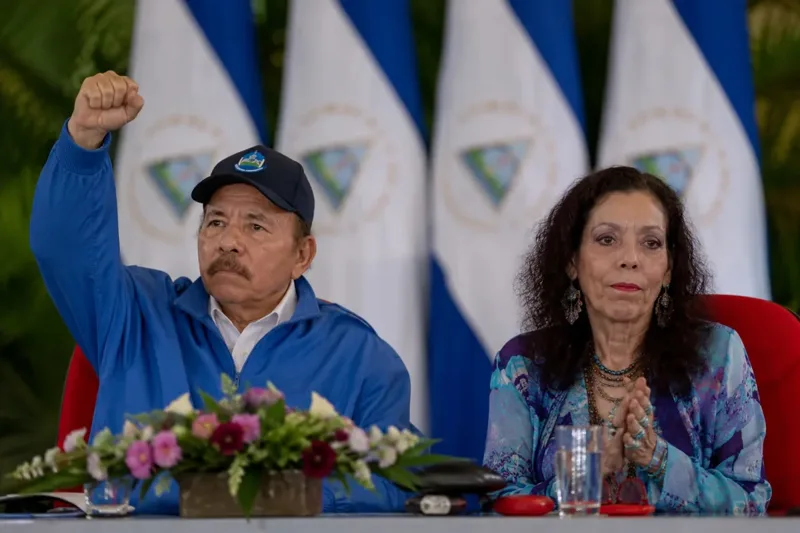
Nicaragua's government has announced plans to stop holding national elections. The move has drawn strong criticism from the international community and human rights organizations. President Daniel Ortega said the country would no longer allow elections that could bring opposition parties to power, marking one of the biggest political changes in Nicaragua's recent history.
President Ortega made the announcement during a public event celebrating the anniversary of the 1979 Sandinista Revolution. In his speech, he said there would be "no more elections" for political groups that, according to him, seek to take power with foreign support. He argued that the change is necessary to protect Nicaragua's peace and stability.
Following Ortega's announcement, Nicaragua's National Assembly, which is controlled by his political allies, introduced a legislative plan to change the country's constitution. If approved, the changes would remove the system of competitive national elections that has existed for decades and cancel the presidential election that had been scheduled for 2027.
Daniel Ortega has been one of Latin America's longest-serving leaders. He first served as president during the 1980s and returned to power in 2007. Over the years, critics say his government has steadily increased its control over the country's political institutions, including the courts, police, military, and election authorities. Recent constitutional reforms also named his wife, Rosario Murillo, as co-president and extended presidential terms from five to six years.
The announcement has been strongly criticized by the United Nations. U.N. High Commissioner for Human Rights Volker Türk said the move would further reduce civil and political freedoms in Nicaragua. He said that people of all political views should have the right to vote and run for office under international human rights standards. He also expressed concern that political power is becoming increasingly concentrated in the hands of the country's leadership.
The United States also criticized the decision. U.S. Secretary of State Marco Rubio said the plan openly shows the government's authoritarian direction and called on other countries to increase pressure on Nicaragua. Several international organizations have warned that ending elections could further isolate the country diplomatically.
Supporters of Ortega argue that the changes are necessary to prevent political instability and foreign interference. The government has repeatedly accused opposition groups of working with outside powers to overthrow the administration. Officials say the reforms are intended to maintain public order and prevent future unrest.
Opposition groups strongly reject those claims. Many opposition leaders have either been jailed, forced into exile, or barred from participating in politics over the past several years. Human rights organizations say political space in Nicaragua has become extremely limited, making it difficult for independent voices, journalists, and civil society groups to operate freely.
Nicaragua has faced political tensions since 2018, when anti-government protests were met with a violent crackdown. Since then, international organizations have repeatedly accused the government of restricting freedom of speech, arresting critics, and weakening democratic institutions. The government has denied many of these accusations and says its actions are necessary to maintain national security.
At this stage, the constitutional changes are still moving through Nicaragua's legislative process. However, because the National Assembly is dominated by Ortega's supporters, analysts believe the reforms are likely to be approved. If that happens, Nicaragua would become one of the few countries in the world without regular competitive national elections.
The proposal has become one of the most closely watched political developments in Latin America. Supporters say it will protect the country from instability, while critics argue it would remove one of the basic features of a democratic system. The long-term impact on Nicaragua's political future and its relationships with other countries remains uncertain.