
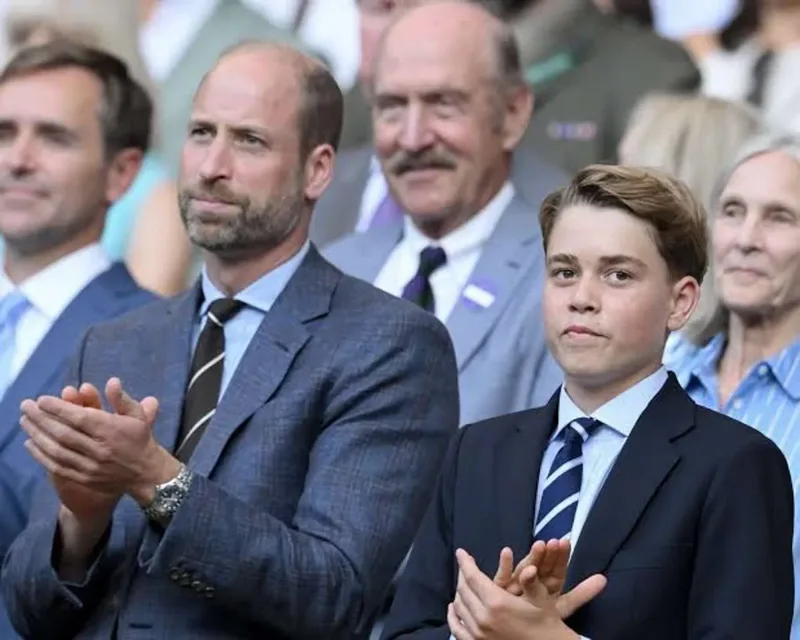
Prince George, 12 and second in line to the throne, starts classes at Eton College in the first days of September, joining the school his father William and uncle Harry both attended. The decision itself was confirmed earlier this summer, ending more than a year of public speculation about where he’d go after leaving Lambrook — but the process behind it is more revealing than the outcome.
The road to the decision
Reporting throughout the deliberation period consistently named two front-runners: Eton, the all-boys boarding school in Windsor founded in 1440, and Marlborough College, the co-educational school in Wiltshire that happens to be Princess Kate’s own alma mater. Kate was reportedly “on the fence” for much of the process, with Marlborough genuinely on her shortlist rather than a token alternative. William, by multiple accounts, was the one pushing consistently for Eton from early on. Royal commentator Charlotte Griffiths described the couple as having “flip-flopped” on the decision before Eton ultimately won out — a level of visible deliberation that’s unusual for a family that typically avoids letting internal disagreement over parenting decisions become public knowledge.
Why Eton over Marlborough is a real choice, not a formality
It’s worth resisting the assumption that Eton was inevitable simply because William went there. Marlborough was a serious contender specifically because it offered something Eton structurally cannot: co-education, and a break from the single-sex boarding tradition that has shaped royal male education for generations. Choosing Eton wasn’t just picking the more famous name — it was choosing continuity over the more contemporary option that was genuinely on the table, at a moment when plenty of comparable British institutions, including ones catering to elite families, have moved toward mixed schooling as the norm rather than the exception.
Why this decision carries more weight than George's cousins'
Prince George isn’t just another royal child starting secondary school — barring the unexpected, he is a future king, and decisions about his upbringing are among the only concrete, observable signals available now about what kind of monarch the institution is shaping him to become decades from now. That makes his schooling a genuinely different category of decision than the ones being made for Princess Charlotte or Prince Louis, who remain at Lambrook for now. It’s also happening at a moment when the monarchy’s costs and relevance are under heavier public scrutiny than at any point in William’s own childhood — the same institution currently working through a Sovereign Grant Bill explicitly designed to guard against the funding looking “inappropriately high” is also, in parallel, choosing to educate its next-generation heir at one of the most expensive and traditionally elite schools in the country.
What to actually take from this
None of this means the decision was wrong, or that Eton is somehow indefensible — it’s the same path William and Harry both took, and continuity has its own institutional logic. But it is a choice, made deliberately and not without internal disagreement, in favour of tradition over the more modern alternative that was seriously considered. For an institution constantly negotiating between its historical identity and contemporary public expectations, that’s a small but genuine data point about which side of that negotiation it’s currently leaning toward.