
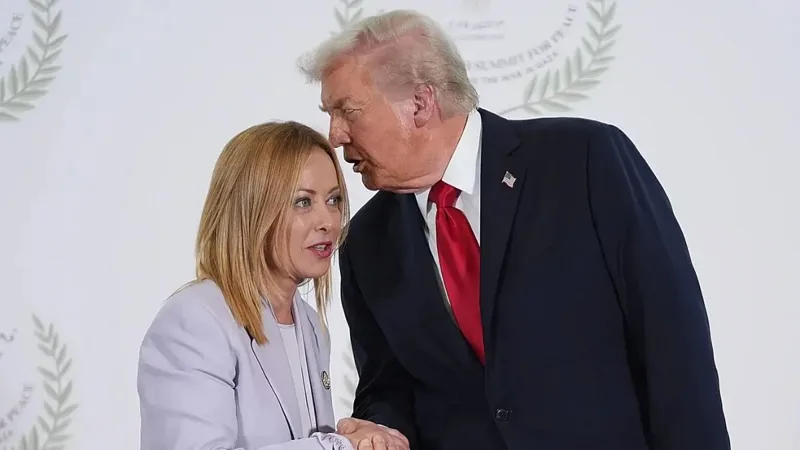
A fresh diplomatic row has erupted between U.S. President Donald Trump and Italian Prime Minister Giorgia Meloni after a disagreement over what happened during a Group of Seven (G7) summit photo opportunity. The clash has once again highlighted growing tensions between the two leaders, who were previously seen as close political allies.
The dispute began after Trump made remarks suggesting that Meloni had repeatedly asked him for a photo during the G7 summit in France. Meloni strongly denied the claim, calling it completely false and publicly pushing back against what she described as misleading statements.
How the G7 Photo Controversy Started
The controversy traces back to informal moments during the G7 summit in Évian-les-Bains, France, where world leaders gathered for diplomatic talks and side meetings.
According to Trump’s version of events, Meloni allegedly requested multiple photo opportunities with him during the summit. He repeated the claim in media interviews and social media posts, framing it as evidence of her interest in maintaining closer ties.
However, Meloni rejected the claim outright, stating that it was “completely invented” and expressing surprise at Trump’s comments. She insisted that no such repeated requests were made and criticized the remarks as inaccurate and unnecessary.
The disagreement quickly escalated into a public exchange, drawing attention from international media and political observers.
Meloni’s Response and Political Reaction in Italy
Following Trump’s comments, Giorgia Meloni responded firmly, defending her position and dismissing the allegations. She emphasized that Italy does not “beg” for political favor or attention and reaffirmed her government’s stance on maintaining dignity in international relations.
The controversy also triggered reactions within Italy’s political establishment. Senior officials and allies expressed concern that the remarks could damage diplomatic relations between the United States and Italy.
In response to the escalating tension, Italy’s Foreign Ministry reportedly adjusted diplomatic engagements, reflecting the seriousness of the fallout.
Trump’s Continued Remarks Fuel Tensions
Despite Meloni’s denial, Trump continued to repeat his claims, insisting that the Italian leader had shown strong interest in being photographed with him.
He also linked the situation to broader political criticism, suggesting that Meloni’s domestic popularity may be influencing her public response. These additional remarks intensified the dispute and widened the gap between the two sides.
Observers note that the exchange reflects Trump’s often confrontational communication style, particularly in high-profile international settings.
Why the Trump–Meloni Feud Matters
The renewed clash is significant because both leaders were previously viewed as politically aligned on several issues, including immigration policy, national sovereignty, and conservative governance approaches.
However, recent global developments, including geopolitical tensions and disagreements over international policy decisions, have strained their relationship.
Key reasons why the dispute matters include:
- Strained U.S.–Europe relations: The disagreement adds pressure to already complex diplomatic ties.
- Political symbolism: Both leaders represent influential right-wing movements in their regions.
- Public perception impact: Statements exchanged publicly can affect domestic approval ratings and international credibility.
- G7 unity concerns: Internal disputes among leaders can overshadow cooperative agendas at global summits.
Background: A Relationship That Has Shifted Over Time
Trump and Meloni were once seen as ideologically aligned figures who maintained a relatively friendly rapport. Their earlier interactions were marked by mutual praise and political alignment on several international issues.
However, recent geopolitical disagreements have changed that dynamic, turning what was once a cooperative relationship into a more publicly contentious one.
The latest Trump–Meloni dispute over the G7 photo claim reflects more than just a disagreement over a social moment—it highlights deeper political tensions and shifting alliances on the global stage.
As both leaders continue to defend their positions, the incident underscores how even informal summit interactions can escalate into major diplomatic controversies in today’s highly connected political environment.