
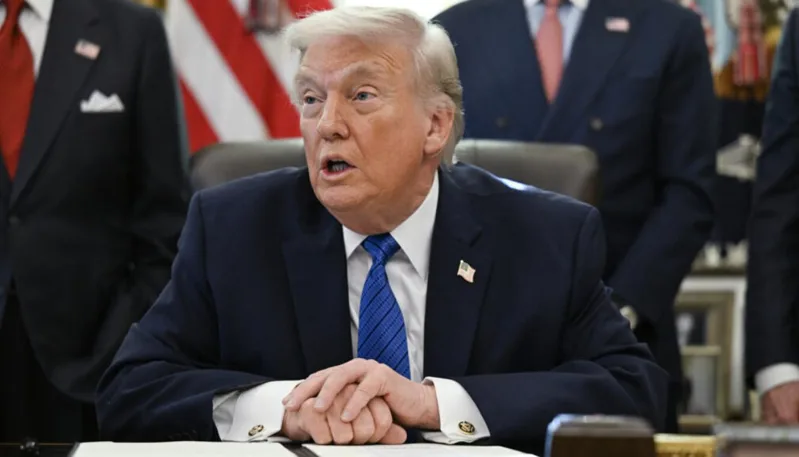
U.S. President Donald Trump has signed a new executive order aimed at strengthening oversight of advanced artificial intelligence systems while maintaining America's lead in the global AI race.
The order introduces a voluntary framework under which developers of the most powerful AI models can submit their systems to the U.S. government for security evaluations before they are released to the public. The initiative is designed to identify potential cybersecurity vulnerabilities, misuse risks and national security concerns associated with frontier AI technologies.
Unlike traditional regulations, the executive order does not create a mandatory licensing regime for AI companies. Instead, it seeks to encourage cooperation between government agencies and private-sector developers working on cutting-edge AI systems.
The move is expected to have the greatest impact on companies such as OpenAI and Anthropic, which are among the leading developers of advanced generative AI models. Future versions of their flagship systems could undergo additional security reviews before launch, giving federal authorities greater visibility into emerging AI capabilities.
For OpenAI, the framework could create an additional layer of scrutiny for upcoming model releases. While the review process may slightly extend development timelines, it could also strengthen the company's standing with government agencies and enterprise customers seeking trusted AI providers.
Anthropic, which has built much of its reputation around AI safety and responsible development, may find itself particularly well positioned under the new framework. The company could play a significant role in helping shape industry standards for evaluating the risks and security implications of advanced AI systems.
Chip giant Nvidia is not directly targeted by the executive order because it develops the hardware powering AI systems rather than the models themselves. However, the company could benefit indirectly from increased demand for AI infrastructure as developers invest more heavily in testing, securing and scaling their most advanced systems.
The executive order also reflects Washington's growing focus on balancing innovation with security. As AI capabilities advance rapidly, policymakers are increasingly seeking ways to reduce potential risks without slowing the pace of technological development.
Federal agencies including the Departments of Defense, Homeland Security, Commerce and Treasury are expected to participate in various aspects of the review process. Their involvement underscores the government's view that frontier AI systems may have implications that extend far beyond the technology sector.
Supporters argue the framework could improve transparency and strengthen safeguards around powerful AI models. Critics, however, may question whether a voluntary system will be sufficient as competition among major AI companies continues to intensify.
The order signals a broader shift in U.S. AI policy: encouraging innovation while establishing mechanisms to evaluate the risks posed by increasingly capable artificial intelligence systems. For OpenAI, Anthropic and Nvidia, it marks another sign that the future of AI development will be shaped not only by technological breakthroughs, but also by national security considerations and government oversight.