
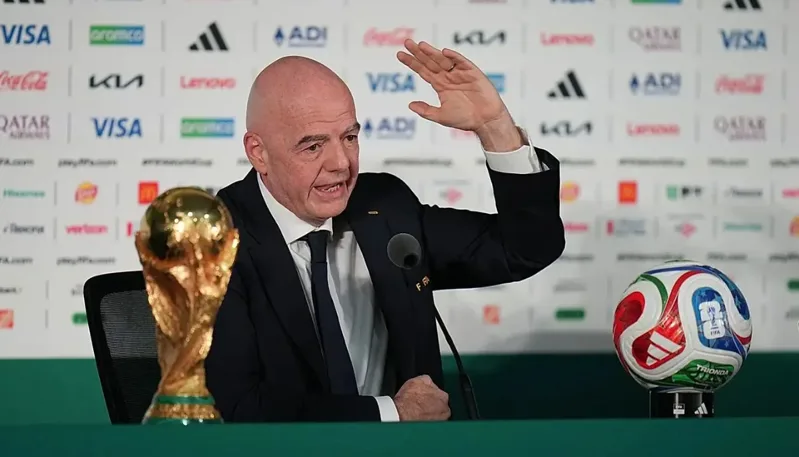
FIFA president Gianni Infantino has defended the use of hydration breaks at the Club World Cup, insisting the measure was introduced solely to protect players and not to create additional commercial opportunities during matches.
The issue has become a talking point throughout the tournament as soaring temperatures across parts of the United States have forced officials to pause games so players can rehydrate and cool down.
Speaking amid growing debate, Infantino dismissed suggestions that the breaks were designed to accommodate advertising or broadcast interests, stressing that player welfare remains FIFA's top priority.
"We're looking at the health of the players," Infantino said, arguing that extreme weather conditions leave officials with little choice but to implement measures that reduce the risk of heat-related illnesses.
The comments come after several players, coaches and football figures voiced concerns about the intense heat experienced during matches. Some games have been played in temperatures exceeding 30°C (86°F), with high humidity adding to the physical demands on athletes.
The Club World Cup is widely viewed as a test run for the 2026 FIFA World Cup, which will be co-hosted by the United States, Canada and Mexico. As a result, discussions surrounding player safety have gained increased attention ahead of football's biggest tournament.
Critics have questioned whether the scheduled cooling breaks inadvertently benefit broadcasters by creating additional windows for advertisements. Similar debates have surfaced in previous international tournaments, particularly when matches were played in hot-weather conditions.
Infantino rejected those claims, maintaining that the decision is rooted in medical advice and scientific guidance rather than commercial considerations.
The FIFA chief also pointed to broader efforts aimed at protecting players, including monitoring weather conditions, adjusting kick-off times when necessary and reviewing tournament protocols in response to extreme heat.
Player welfare has become one of the most closely watched issues in modern football, with growing concerns over congested schedules, travel demands and climate-related challenges. Several player unions and health experts have called for stronger safeguards as global temperatures continue to rise.
The debate is expected to continue as the Club World Cup progresses and preparations intensify for the 2026 World Cup. Organisers face increasing pressure to balance competitive integrity, fan experience and player safety during tournaments staged in challenging weather conditions.
For now, FIFA's position remains clear: hydration breaks are a sporting necessity, not a commercial strategy.
As temperatures continue to dominate discussions around the tournament, the effectiveness of those measures may play a key role in shaping future policies for major international competitions.