
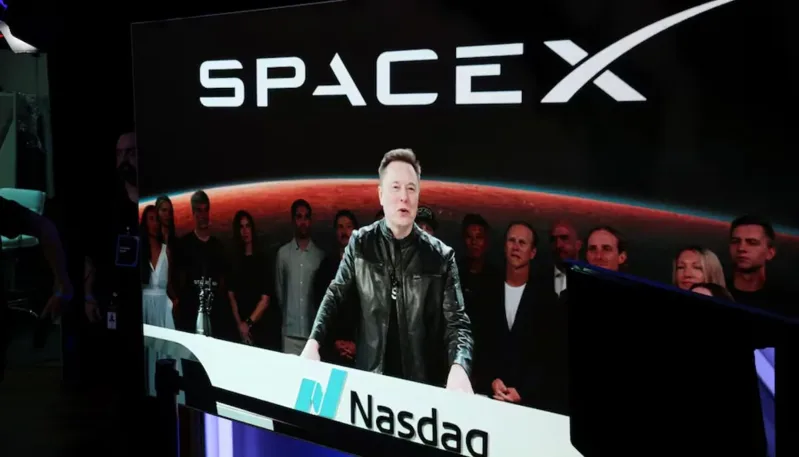
When Elon Musk's SpaceX launched its long-awaited initial public offering (IPO) earlier this month, investor enthusiasm appeared unstoppable.
The aerospace giant made history by raising approximately $75 billion in what became one of the largest public offerings ever seen on Wall Street. Shares surged in their first days of trading, briefly fueling hopes that SpaceX could become one of the market's biggest success stories of 2026.
Just two weeks later, however, the picture looks far more complicated.
While investors who secured shares at the IPO price are still sitting on gains, the stock has retreated sharply from its post-listing highs, leaving many late buyers facing losses.
SpaceX's Record-Breaking IPO
SpaceX priced its IPO at $135 per share, giving the company a valuation approaching $1.8 trillion and cementing its status as one of the world's most valuable publicly traded firms.
Demand was intense from the outset. Shares opened above the IPO price and quickly climbed as retail and institutional investors rushed to gain exposure to the company behind the Falcon rocket program, Starlink satellite network and ambitious plans for deep-space exploration.
The excitement reflected years of anticipation surrounding a potential public listing by the company founded by Elon Musk.
Early Investors Still in Profit
Despite recent declines, investors who received allocations at the IPO price remain in positive territory.
With shares trading around the low-$150 range in late June, IPO participants have generated returns of roughly 13% in a matter of weeks.
For an investor who purchased $10,000 worth of stock at the IPO price, that gain would translate to approximately $1,300 before taxes and transaction costs.
Although those returns remain attractive, they are significantly lower than what investors briefly enjoyed during the stock's initial rally.
What Happened to the Post-IPO Surge?
In the days following the listing, SpaceX shares soared past $200 and reached highs above $225, delivering gains of more than 60% from the IPO price.
The rally was fueled by strong retail demand, optimism surrounding the company's growth prospects and excitement about future revenue opportunities tied to Starlink and commercial space operations.
However, as the initial excitement faded, investors began taking profits.
Analysts also started examining the company's valuation more closely, leading to concerns about whether the stock's rapid rise was justified by its current financial performance.
The result was a sharp pullback that erased a large portion of the early gains.
Winners and Losers
The different entry points tell very different stories.
Investors who secured shares at the IPO price remain profitable.
Those who bought on the first day of trading have seen only modest gains.
Meanwhile, investors who entered near the stock's peak are facing losses exceeding 30% as the share price moved lower.
The situation highlights the risks associated with buying into highly anticipated IPOs after the initial surge has already occurred.
What's Next for SpaceX Stock?
Despite the recent decline, market observers remain focused on several potential catalysts that could influence SpaceX shares in the coming months.
The company is expected to benefit from growing institutional ownership, including potential inclusion in major stock indexes. Such additions often trigger buying from exchange-traded funds and index-tracking portfolios.
Investors will also be watching future earnings reports, Starlink subscriber growth, launch activity and developments related to SpaceX's long-term space exploration ambitions.
A Reminder About IPO Investing
SpaceX's first weeks as a public company offer a reminder that even the most anticipated IPOs can experience significant volatility.
The company's stock remains above its offering price, meaning early investors are still ahead. Yet the dramatic retreat from its highs demonstrates how quickly sentiment can change once the excitement surrounding a market debut begins to fade.
For now, SpaceX remains one of Wall Street's most closely watched stocks, with investors eager to see whether the company can justify the enormous expectations attached to its historic public offering.