
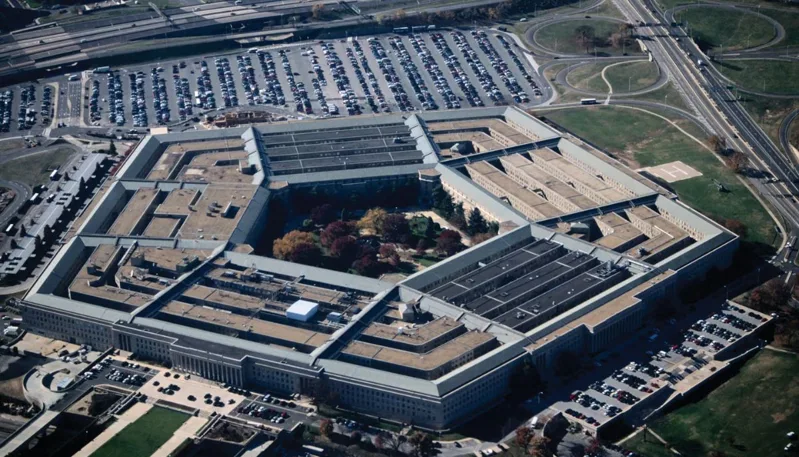
The Pentagon lockdown triggered by a hazardous materials alert has once again drawn attention to one of the world’s most advanced security and threat detection systems — a tightly controlled environment designed to respond within seconds to potential chemical, biological, or airborne risks.
While early reports confirmed a hazmat-related alert inside the Pentagon building in Arlington, Virginia, officials have not disclosed the exact substance or cause behind the incident. However, the response followed a well-established emergency protocol used in one of the most heavily fortified government facilities in the world.
The Pentagon is equipped with an integrated hazard detection network that continuously monitors air quality, ventilation systems, and internal environmental sensors. These systems are designed to automatically trigger containment procedures if abnormal chemical signatures or airborne threats are detected.
Once activated, the protocol can immediately isolate affected zones, restrict movement between corridors, and initiate partial or full lockdown procedures depending on the severity of the alert. In many cases, occupants may not even be aware of the trigger until movement restrictions are already in place.
Emergency response teams, including specialized hazmat units and Pentagon Force Protection officers, are then deployed to identify the source of the alert. The system is designed to operate on caution-first principles, meaning false alarms are treated with the same urgency as real threats until ruled out.
Security analysts say incidents like these highlight how modern government buildings have shifted toward “automatic containment architecture,” where building systems themselves function as first responders before human verification occurs.
Unlike traditional security threats, hazardous material alerts are particularly complex because they can originate from mechanical faults, ventilation contamination, cleaning chemicals, or external environmental triggers — making rapid classification difficult in the early stages.
Officials have not confirmed whether any dangerous substance was present in the latest incident, and investigations are ongoing.
However, the brief lockdown underscores the Pentagon’s unique position as both a military command center and a high-security environmental control zone — where even minor anomalies can trigger large-scale operational shutdowns.
As security systems become increasingly automated, experts say such incidents may become more common — not because threats are rising, but because detection systems are becoming more sensitive than ever before.