
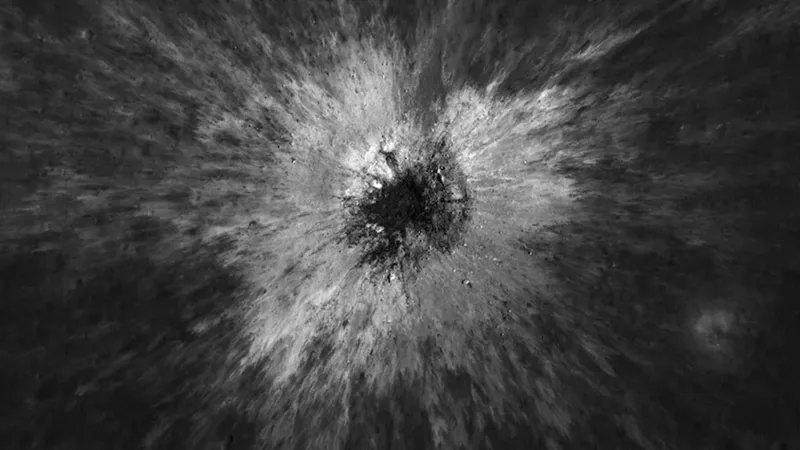
NASA has reported a lunar crater 728 feet wide, but the collision that created it happened more than two years ago.
In its September 16 account, NASA places the impact between April 11 and May 22, 2024. The crater, named McGetchin, is about 141 feet deep.
How the dates fit together
Scientist Robert Wagner spotted the feature on October 24, 2025, while comparing maps made from Lunar Reconnaissance Orbiter images. Closer observations followed.
The sequence matters: the impact occurred in 2024, the feature was identified in 2025, and NASA described the findings in 2026.
Thermal measurements also revealed a cold region about four miles across. Disturbed surface material retains less heat, showing that the collision changed ground well beyond the crater’s rim.
What “once in a century” means
NASA says an impact this large is estimated to occur roughly once a century or less often. That is a frequency estimate, not a timetable for the next strike.
How to read the discovery timeline
The impact window, identification date and publication date answer different questions. The first brackets when the surface changed; the second records when a researcher recognised the feature; the third tells readers when the findings were announced. Keeping those dates separate avoids turning a newly published discovery into a claim that a collision has just happened.
A frequency estimate also cannot predict the date of the next impact. It describes how often an event of a particular size is expected over a long period, rather than a countdown.
Explore the lunar landscape
Readers interested in observing the Moon can use our guide to NASA’s lunar maps, viewing equipment and at-home resources. It explains how to recognise surface features and why their appearance changes with the lighting.
Find more space and research stories in our Science & Health section.