
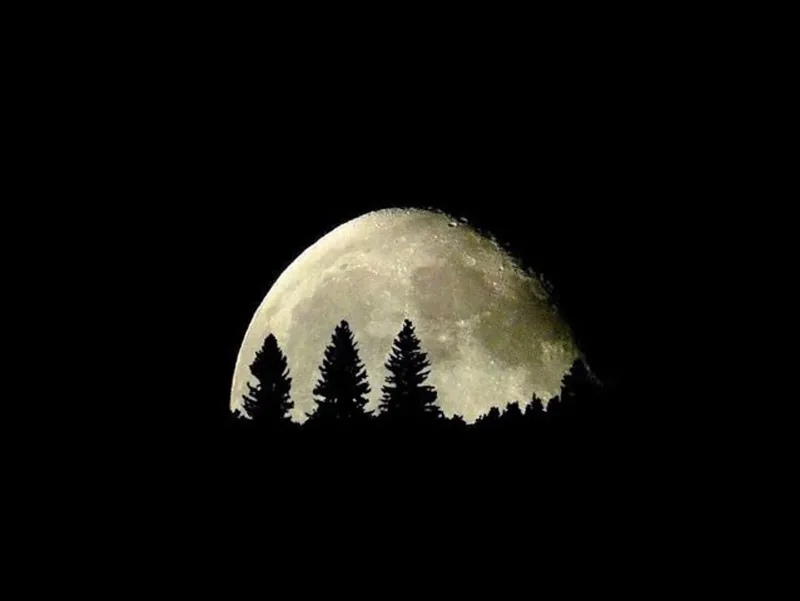
NASA is inviting people around the world to observe the Moon on Saturday, September 19, with a programme that can be followed from a garden, a local astronomy gathering or indoors. The annual event gives beginners a reason to look closely at a familiar object, with free maps and activities that explain what they are seeing.
International Observe the Moon Night is a public science event, rather than a rare astronomical alignment. There is no single worldwide viewing minute. Your view depends on your location, the Moon’s position and local weather, while organised gatherings have their own start times.
Why this phase is useful
NASA’s programme overview explains that the celebration takes place in September or October around the Moon’s first-quarter phase. That makes it suitable for evening observation and gives viewers a particularly useful boundary to explore: the terminator, where lunar day meets lunar night.
Shadows near that boundary bring out the shape of the surface. A crater that looks relatively flat under direct illumination can reveal its rim and surrounding relief when sunlight falls across it at an angle. The changing light is part of the attraction, so returning on another evening can produce a different view of the same landscape.
Start with your eyes, then add equipment
You do not need a telescope to participate. Begin by comparing the darker patches with the brighter areas. According to NASA’s Moon-viewing guide, the dark regions known as maria are ancient lava plains. Their traditional name means seas, but they are solid rock, not bodies of water.
The brighter highlands preserve older lunar crust. This contrast gives a first-time observer something meaningful to identify before trying to locate individual craters. Sketching the pattern can also help you recognise the same regions during a later observation.
Binoculars reveal more texture, including mountain ridges and impact features. NASA recommends at least seven-times magnification; stronger binoculars may need a tripod to keep the image steady. Start with a stable, comfortable view rather than assuming the highest magnification will produce the best experience.
Keep optical equipment away from the Sun. For a family session, an adult should supervise its use and choose a viewing position where people can stand safely without blocking a pavement or road.
Use the right map
NASA has prepared maps for the 2026 event, highlighting features with favourable lighting. Use those alongside the view in front of you instead of expecting every feature in a photograph of the full Moon to be equally clear.
The map resources also identify Apollo landing regions. Four landing sites lie on the visible portion of the Moon for this year’s event. That means their locations can be explored on the map; it does not mean a backyard telescope will show the equipment astronauts left behind.
A simple observing exercise is to choose one dark plain, one bright highland region and one feature near the terminator. Record what you can distinguish, then compare your notes with NASA’s labelled map.
Events and a plan for cloud
At NASA’s Goddard visitor centre in Greenbelt, Maryland, the September 19 celebration is scheduled for 6–9 p.m. EDT. It is free, with activities indoors and outdoor telescopes if weather permits. Visitors can also see an Apollo 14 Moon rock.
The programme lists planetary scientist Amanda Nahm at 6:30 p.m. and scientific visualiser Ernie Wright at 7:30 p.m. NASA says the event goes ahead rain or shine; telescope viewing remains weather-dependent. Check the visitor centre’s latest arrangements before travelling.
Elsewhere, NASA’s event finder includes local and virtual gatherings, some on dates around September 19. Confirm the date and time zone of the individual listing.
If clouds intervene, NASA’s at-home resources include spacecraft imagery, virtual exploration and Moon-inspired art. Save your sketch or observation notes and try again on a clear evening: comparing observations is a useful part of learning the lunar landscape.