
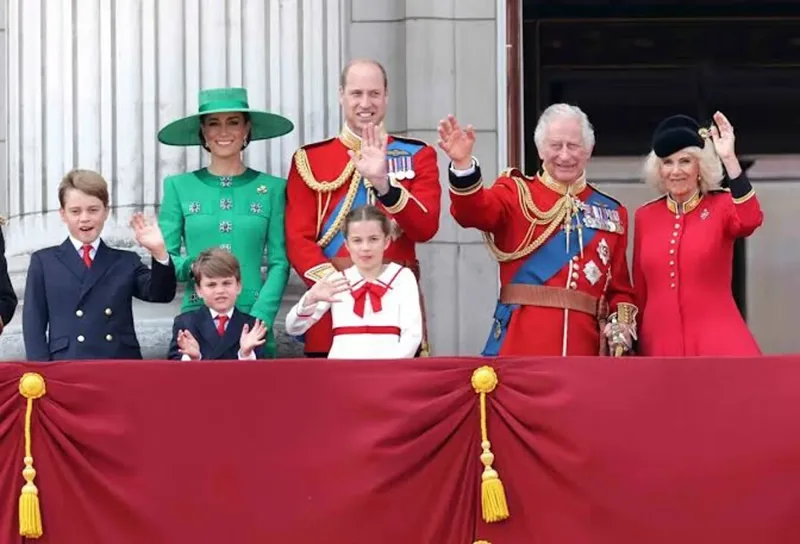
Buried under the headlines about Harry, Meghan and Andrew this month is a quieter but genuinely consequential piece of royal news: Parliament is preparing to pass a Sovereign Grant Bill that will permanently change the formula behind the monarchy’s public funding — not just adjust it once, but build in a mechanism to stop it happening again.
What the Grant does right now, briefly
As covered in our earlier explainer on royal finances, the Sovereign Grant is calculated as 12% of the Crown Estate’s profits from two years earlier, a formula that’s driven the Grant sharply upward in recent years thanks to a surge in offshore wind leasing revenue. That’s produced a Grant of £137.9 million for 2026/27 — a figure large enough that the government has been openly signalling a “reset” was coming.
What the Bill actually does
The Bill was announced in the 2026 King’s Speech, following the Royal Trustees’ review of the Grant, which concluded in June 2026 after examining the Royal Household’s expected income and expenditure through 2031/32, alongside the state of the Sovereign Grant Reserve and the remaining cost of the Buckingham Palace reservicing project. Two things come out of that review. First, a new baseline and an updated percentage for calculating the Grant going forward, bringing the figure down to a projected £99.9 million in 2027/28 once the Palace reservicing work wraps up. Second, and less reported: the Bill introduces a standing mechanism for future reductions, specifically designed to prevent the Grant from reaching “inappropriately high” levels again.
Why the second part matters more than the number
A one-off reset is a headline. A built-in mechanism is a structural change. The current formula has no ceiling — it simply tracks Crown Estate profits, whatever they happen to be, which is exactly how offshore wind revenue pushed the Grant up so sharply in the first place. A mechanism explicitly built to catch and correct future “inappropriately high” funding is Parliament acknowledging that the formula itself was the problem, not just this particular spike. It’s a tacit admission that tying royal funding directly to a fluctuating, uncapped revenue stream was always going to eventually produce a number that looked bad regardless of what the Palace was actually spending it on.
What happens next
The Bill still has to move through Parliament before any of this takes legal effect, and specific procedural progress beyond the King’s Speech announcement hasn’t been detailed publicly yet. But the direction is clear: the Sovereign Grant is heading toward a lower, more constrained future, with an actual guardrail against the kind of runaway growth that made this year’s £137.9 million figure so easy to criticize in the first place. For an institution whose finances are perpetually litigated in public, that’s a bigger deal than the £38 million reduction it’s actually being reported as.