
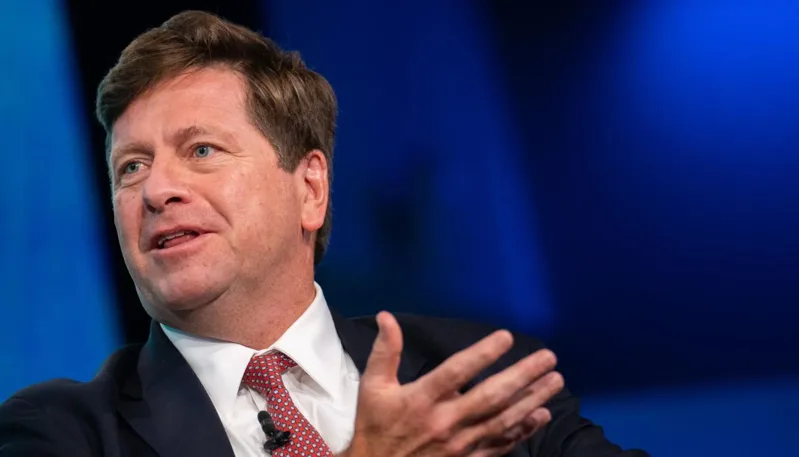
President Donald Trump has nominated Jay Clayton, a former Wall Street lawyer and Securities and Exchange Commission (SEC) chair, to serve as the next Director of National Intelligence (DNI), placing him in charge of overseeing America’s sprawling intelligence community.
The 58-year-old lawyer is currently serving as the U.S. Attorney for the Southern District of New York, one of the most influential federal prosecutor roles in the United States. His nomination marks a high-profile shift from financial regulation and federal prosecution into national security leadership.
From Wall Street to Washington
Clayton built his early career as a corporate attorney at the elite law firm Sullivan & Cromwell, where he represented major financial institutions and advised on high-value mergers, acquisitions, and capital market transactions.
He later rose to national prominence in 2017 when he was appointed SEC chair under Trump’s first administration. During his tenure, Clayton focused on modernizing financial regulations, improving market efficiency, and expanding investor protections, while maintaining a generally pro-business regulatory stance.
A Non-Traditional Intelligence Pick
Unlike traditional intelligence chiefs who typically come from military, defense, or intelligence backgrounds, Clayton has no direct experience in national security operations or intelligence agencies.
If confirmed, he would oversee coordination between 18 U.S. intelligence agencies, including the CIA, NSA, and FBI intelligence divisions — making the role one of the most powerful positions in American security policy.
Supporters argue that his legal and administrative background, along with his experience managing complex federal institutions, could help streamline coordination across agencies often criticized for bureaucratic overlap.
Why the Nomination Matters
The Director of National Intelligence plays a central role in shaping U.S. intelligence priorities, briefing the president on global threats, and coordinating intelligence sharing across government agencies.
Clayton’s nomination comes at a politically sensitive time, as debates continue in Washington over surveillance authority, cybersecurity threats, and intelligence reform.
Analysts say the choice signals a preference for an establishment-style administrator rather than a career intelligence official.
What Happens Next
Clayton’s nomination will now move to the U.S. Senate, where lawmakers are expected to scrutinize both his lack of intelligence background and his record as a financial regulator and federal prosecutor.
If confirmed, he will assume responsibility for coordinating intelligence assessments, managing inter-agency operations, and advising the president on national security risks.