
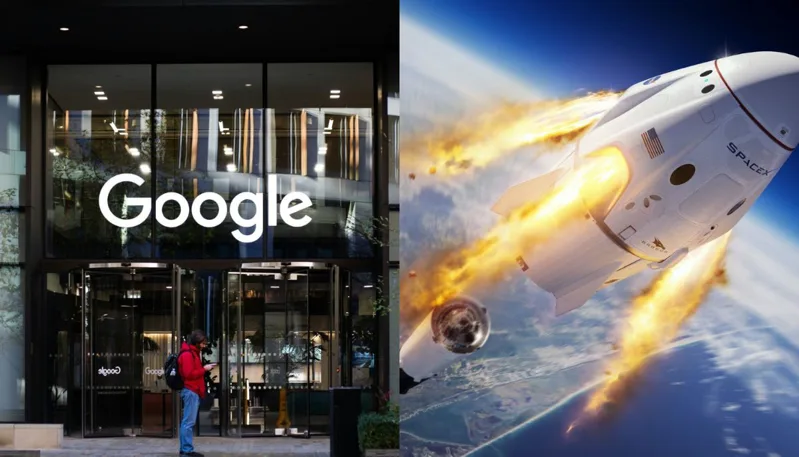
Google's reported agreement to lease computing capacity from Elon Musk-owned SpaceX is attracting attention because of its staggering price tag. However, the bigger story is not the money itself — it is what the deal reveals about the future of artificial intelligence and the growing global shortage of computing power.
According to reports, Google has agreed to use SpaceX's AI infrastructure in a deal worth around $30 billion through June 2029. The arrangement would reportedly give the tech giant access to tens of thousands of advanced GPUs and other computing resources needed to train and operate increasingly powerful AI systems.
At first glance, the agreement may seem unusual. Google already operates some of the world's largest data centers and cloud computing networks. Yet the reported deal highlights a reality that is reshaping the technology industry: even the biggest companies are struggling to secure enough computing capacity to meet the exploding demand for artificial intelligence.
Why AI Companies Are Racing for Computing Power
The AI boom has created a new kind of global competition. While previous technology races focused on software and talent, today's battle is increasingly centered on access to GPUs, data centers and electricity.
Training advanced AI models requires enormous amounts of computing power. Industry analysts estimate that modern frontier AI systems can consume billions of dollars worth of hardware resources during development. As companies rush to build more capable models, demand for infrastructure has surged faster than new facilities can be constructed.
This has transformed computing capacity into one of the most valuable assets in the technology sector.
A Remarkable Shift in the Musk-Google Relationship
The reported agreement also reflects how dramatically the relationship between Google and Musk's business empire has evolved.
Just a few years ago, Google was helping support SpaceX's connectivity ambitions through cloud services and infrastructure partnerships. Now, reports suggest the flow of resources has reversed, with Google seeking access to infrastructure associated with Musk's expanding AI ecosystem.
The development underscores how rapidly power dynamics are changing in Silicon Valley as artificial intelligence becomes the industry's primary growth engine.
What It Means for SpaceX
For SpaceX, the deal could provide another major revenue stream beyond rocket launches and Starlink internet services.
The company has traditionally been viewed as a space exploration and satellite communications giant. However, access to large-scale computing infrastructure could position it as a significant player in the AI economy as well.
If the reported figures are accurate, the agreement would demonstrate that SpaceX's infrastructure assets are becoming valuable enough to attract some of the world's largest technology companies.
Why Investors Are Paying Attention
The timing is particularly noteworthy because it comes as SpaceX prepares for a highly anticipated public listing.
Investors evaluating the company will be looking beyond rockets and satellites to assess its long-term revenue opportunities. Large AI infrastructure contracts could strengthen the argument that SpaceX is evolving into a diversified technology company rather than a pure aerospace business.
For Wall Street, that distinction could have major implications for how the company is valued.
The Bigger Picture
The reported Google-SpaceX agreement is ultimately a reminder that the AI race is no longer just about building smarter models. It is increasingly about securing the physical infrastructure needed to run them.
As artificial intelligence systems become larger and more complex, access to data centers, energy supplies and advanced processors may prove just as important as breakthroughs in software.
Whether or not this particular deal becomes a defining moment, it signals a broader trend: in the age of AI, computing power is emerging as one of the world's most strategic resources.